Twenty eight large format future garden concepts including ten night-time transformations — parametric canopies, living walls, natural swimming lagoons and neon lit geometry.
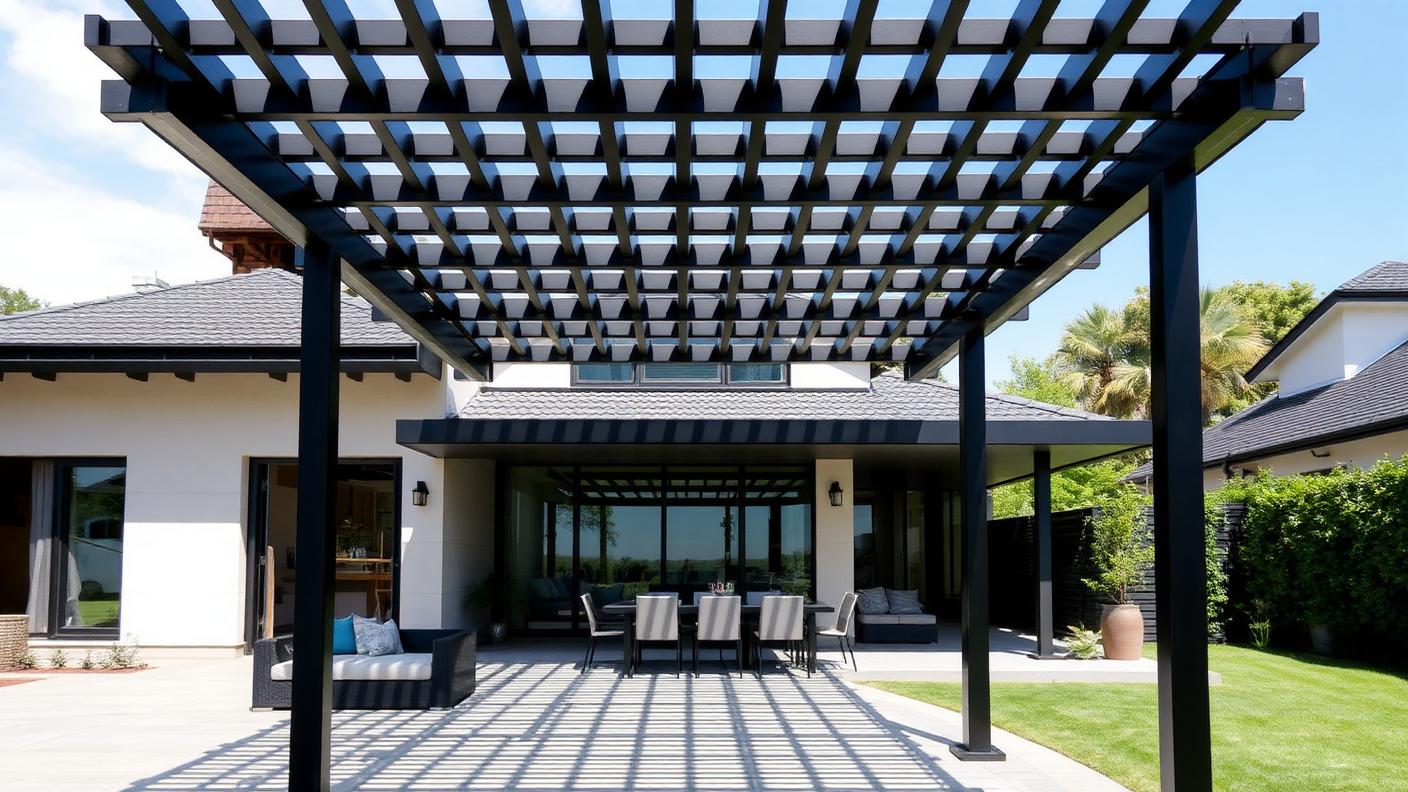
A future garden is not simply a garden with lights added to it. The concepts in this feature all share one idea: the garden is designed twice, once for daylight and once for darkness, and both versions are treated as the finished article. In daylight the geometry does the work — sculptural planters, clean edges, water held perfectly level, shade structures that throw a repeating pattern across paving. After dusk the same shapes are traced in light, and the garden becomes a completely different room that belongs to the same house.
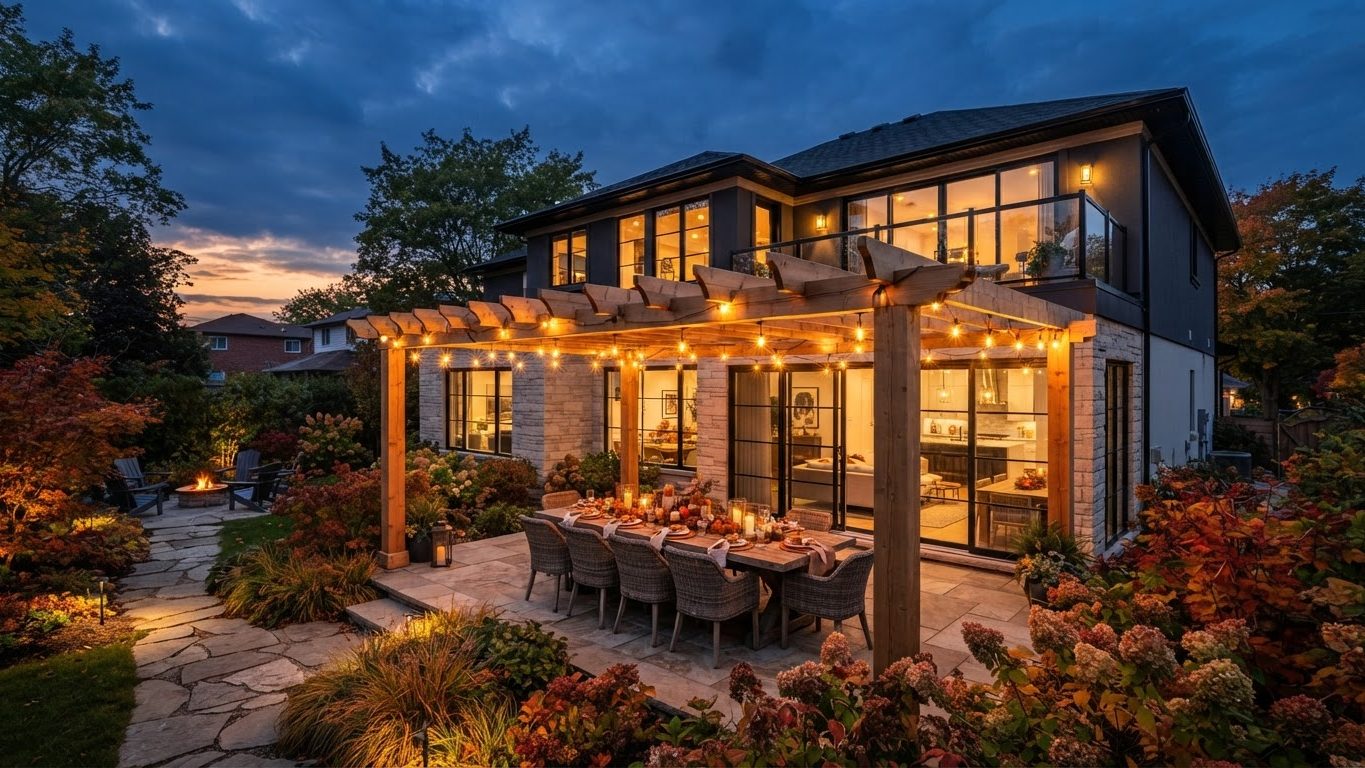
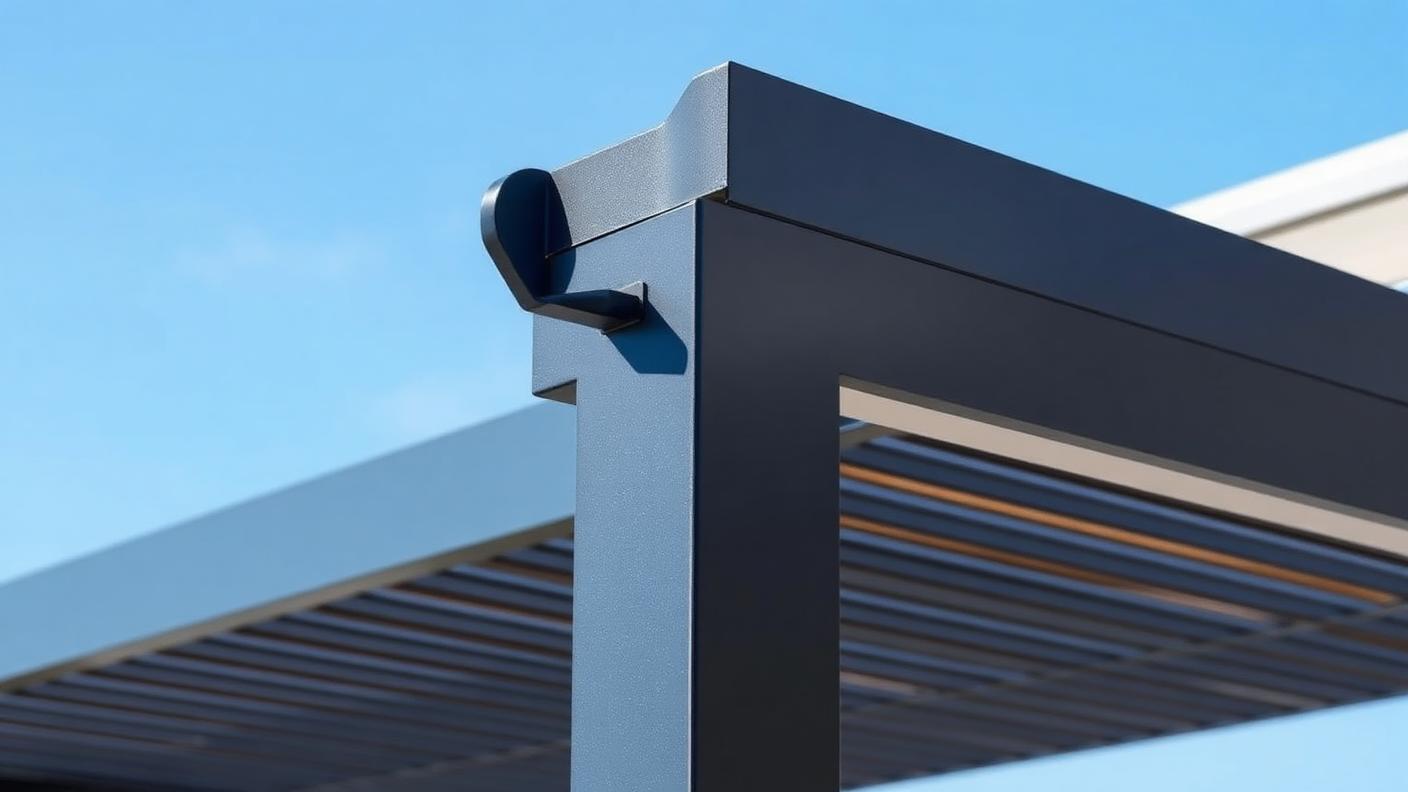
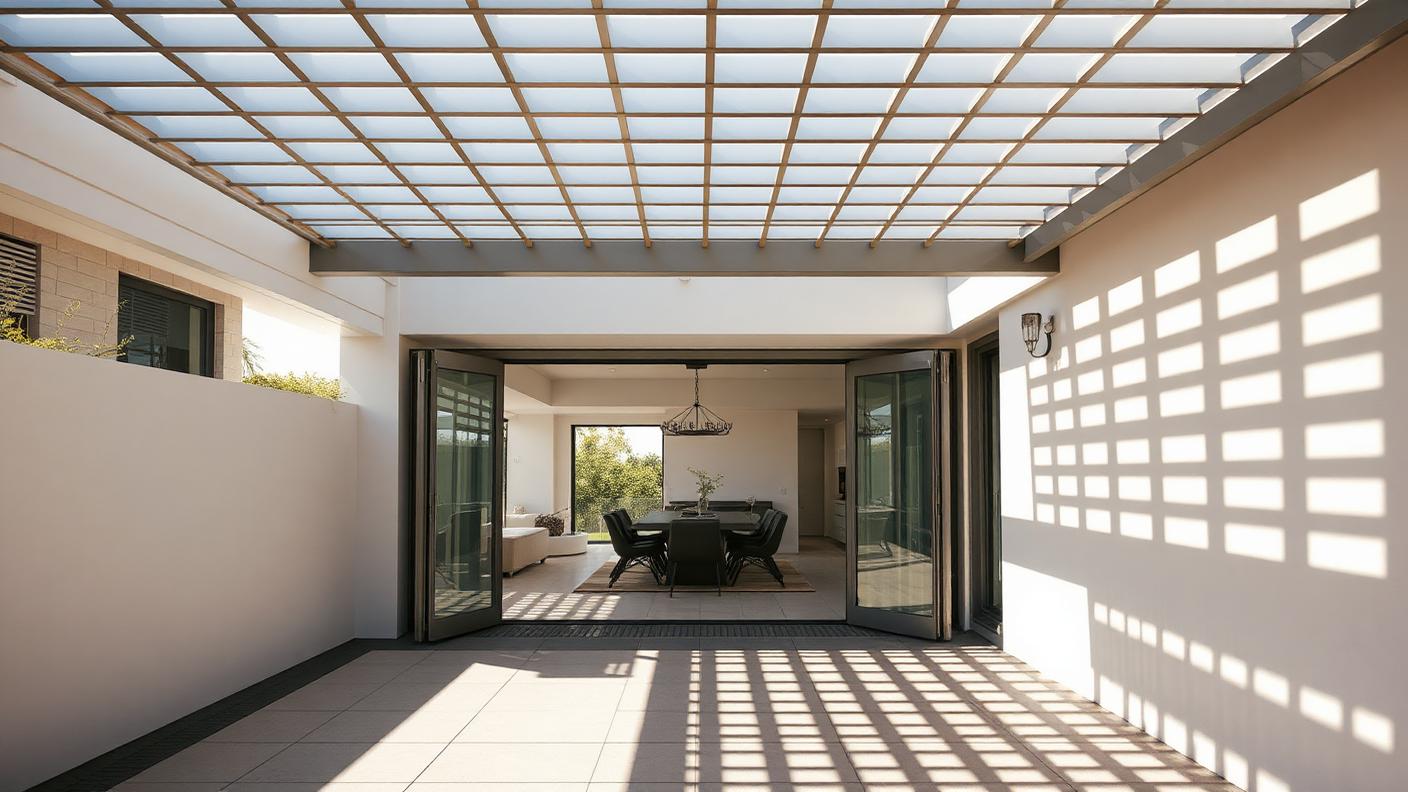
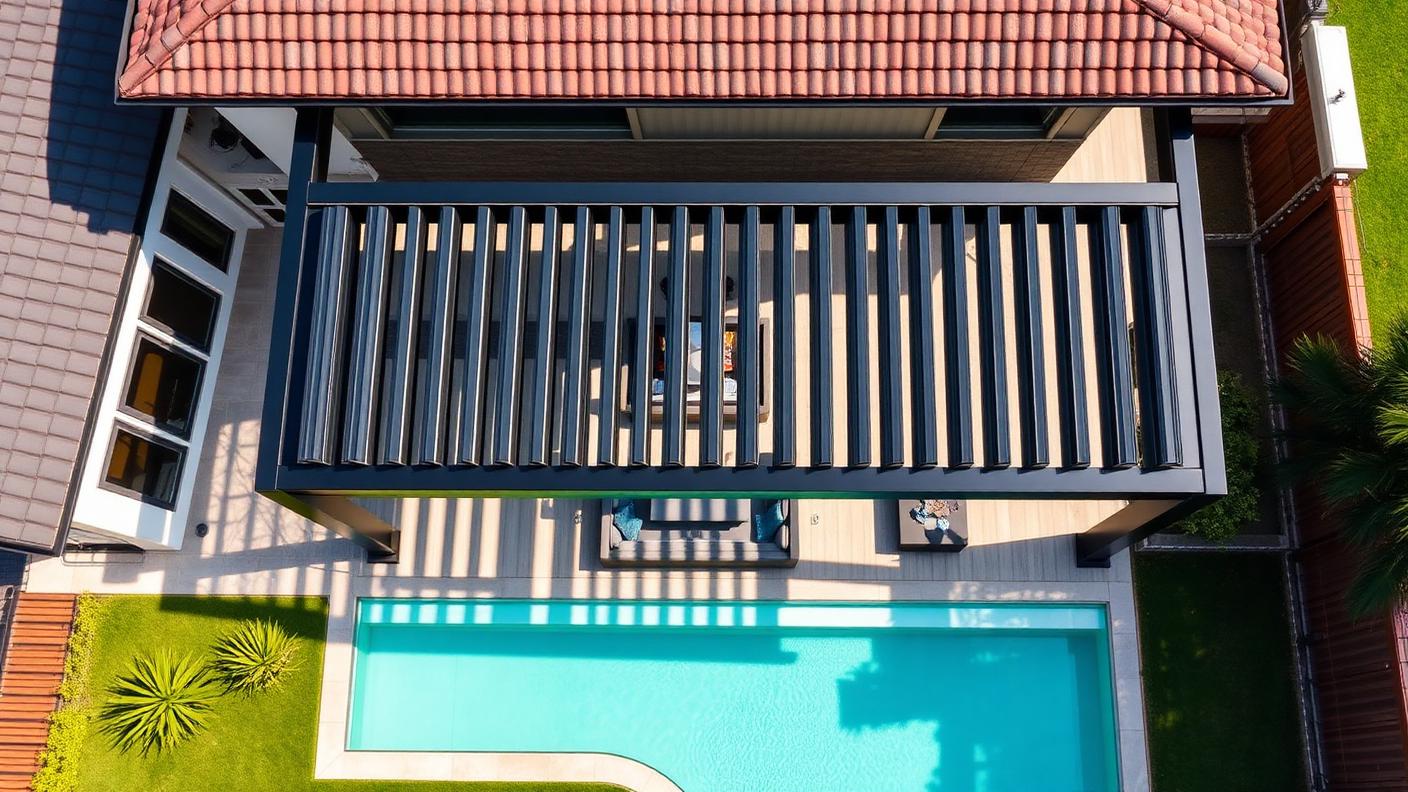
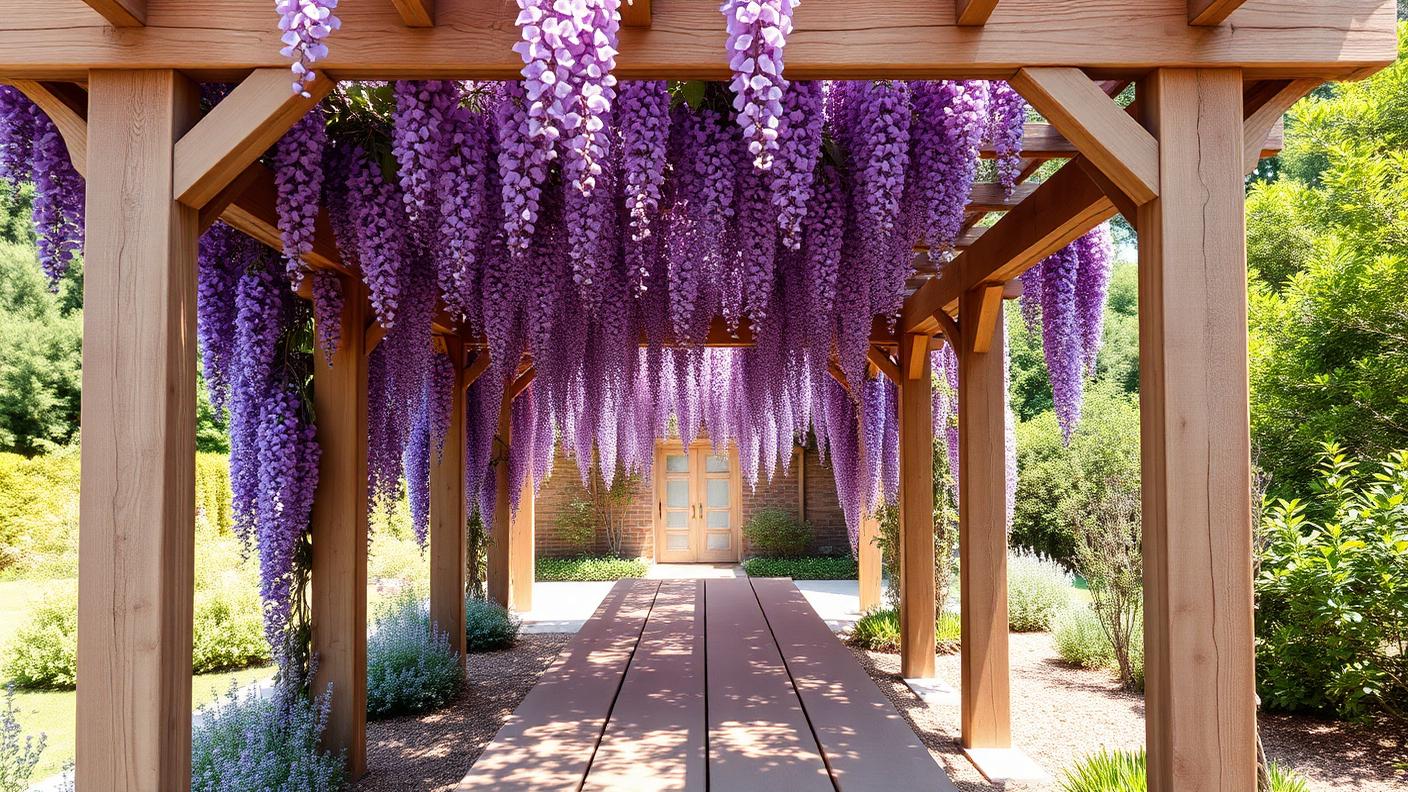
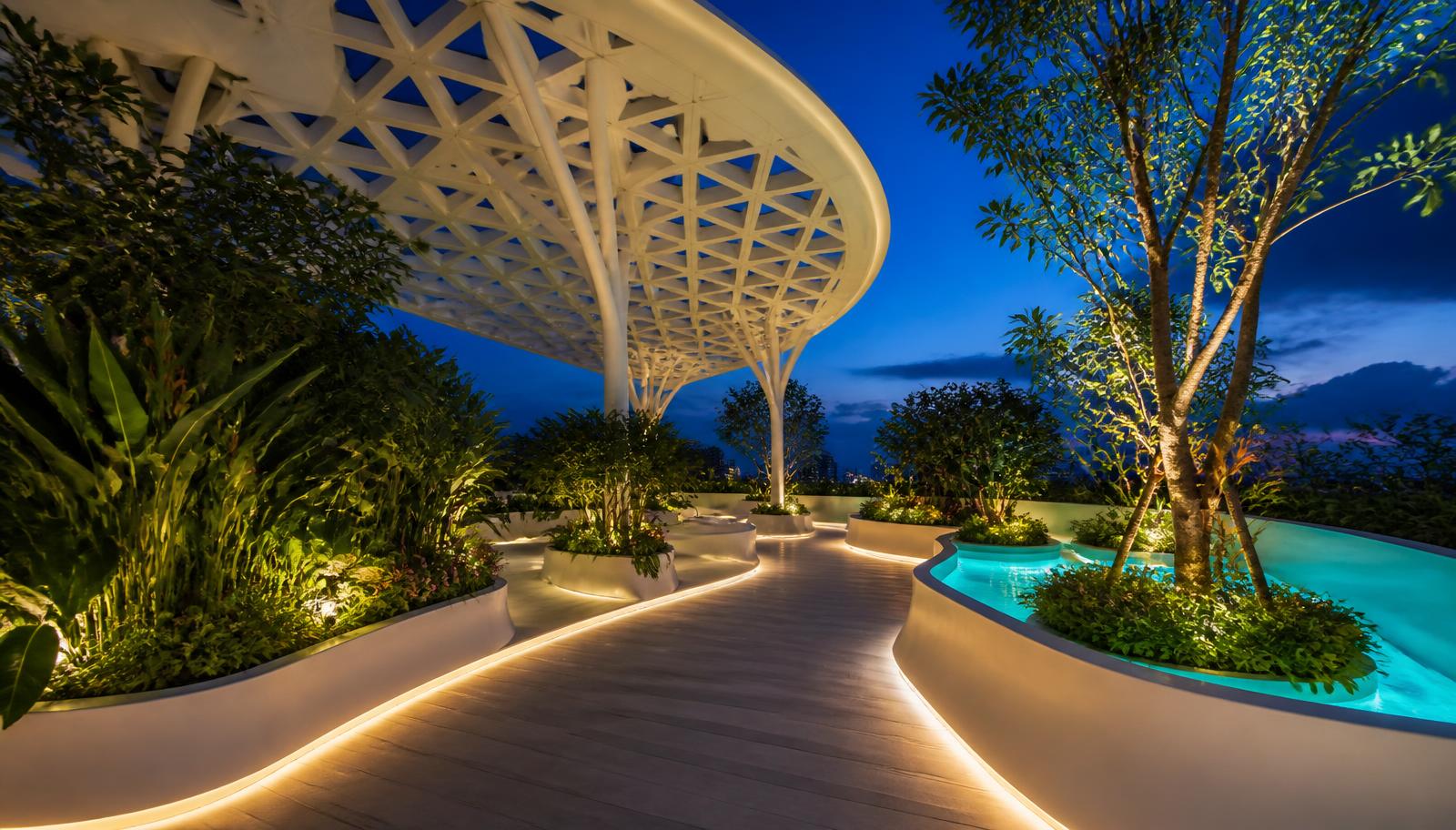
The structures come first. Parametric timber and aluminium canopies are the signature element of the modern garden because they solve three problems at once: they create shade in summer, they carry lighting, heating, speakers and irrigation without a single visible cable, and they define an outdoor room so furniture has somewhere to sit. Where a canopy is not possible, a run of tall vertical fins or a slatted screen does the same job of making the garden feel built rather than decorated.
Planting in a future garden is deliberately restrained and repeated. Rather than one of everything, these concepts use three or four species planted in blocks — grasses for movement, clipped forms for structure, one tree for height and shade, and a single flowering layer for colour. The restraint is what makes the geometry read clearly, and it also makes maintenance realistic. Living walls and hydroponic panels extend the same planting vertically where ground space is tight, which is why they appear so often in courtyard and townhouse designs.
Water is the other constant. A natural swimming lagoon with a planted filtration zone, a raised infinity edge that spills into a hidden channel, or a simple black lined pool that mirrors the sky — all of them add light, sound and a sense of depth that no planting can. The detail that matters is the coping level: water held flush with the paving looks engineered and expensive, water sitting below a raised bullnose looks like a swimming pool bolted into a garden.
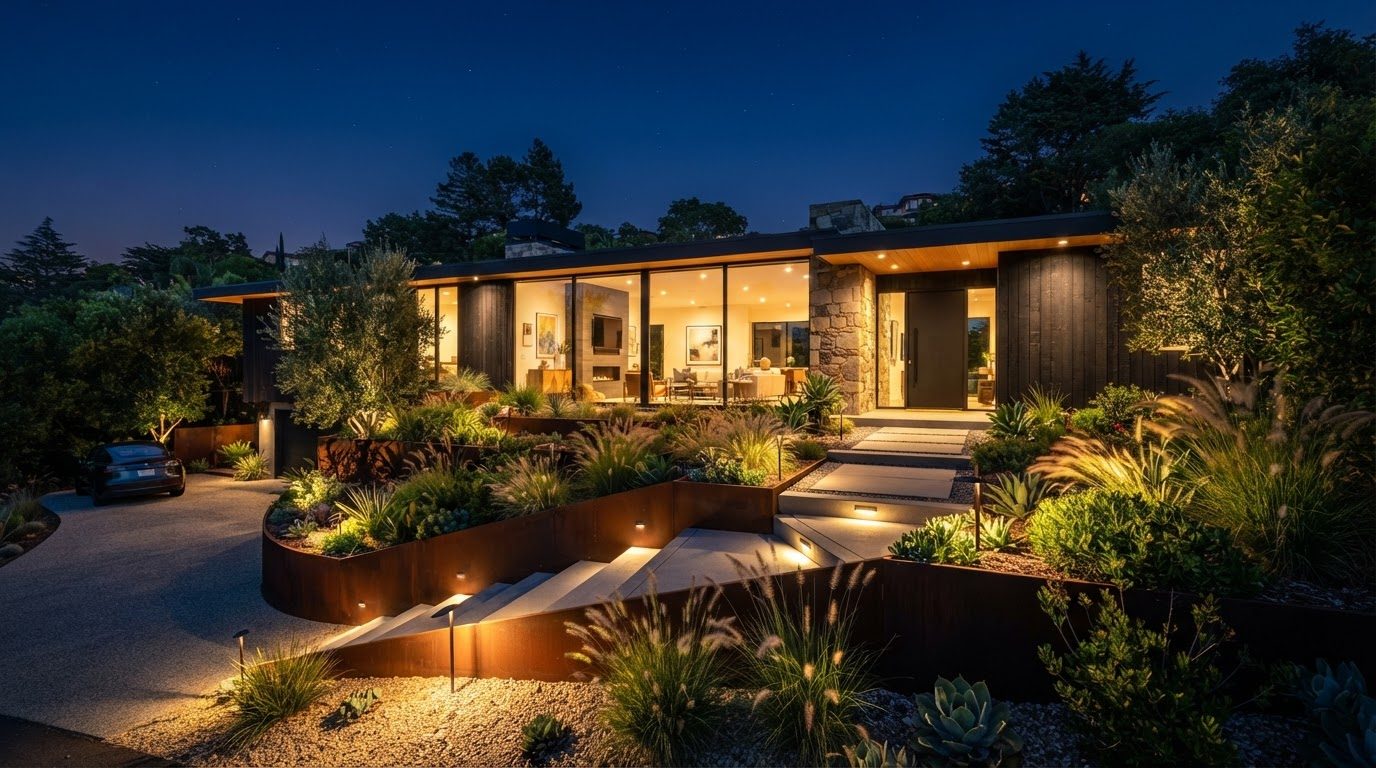
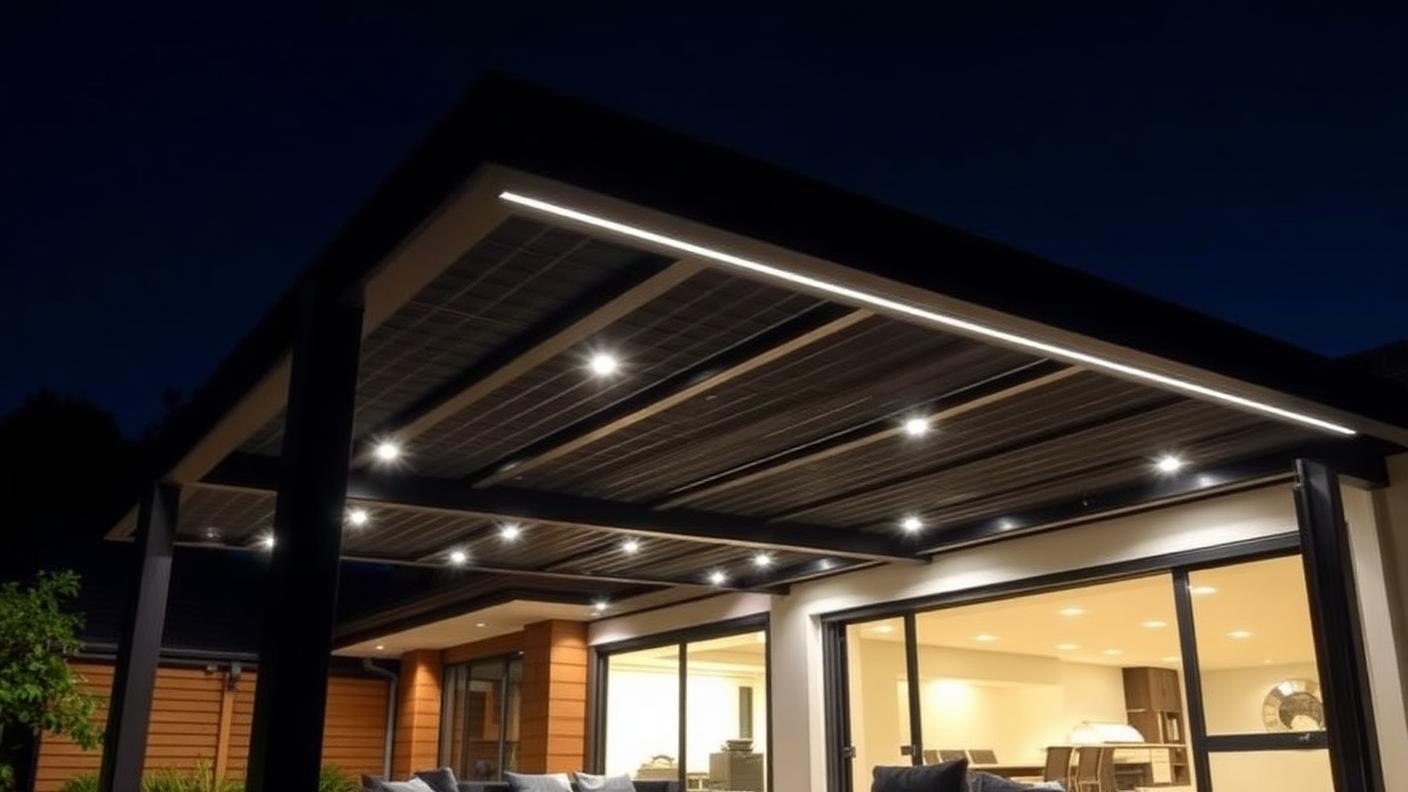
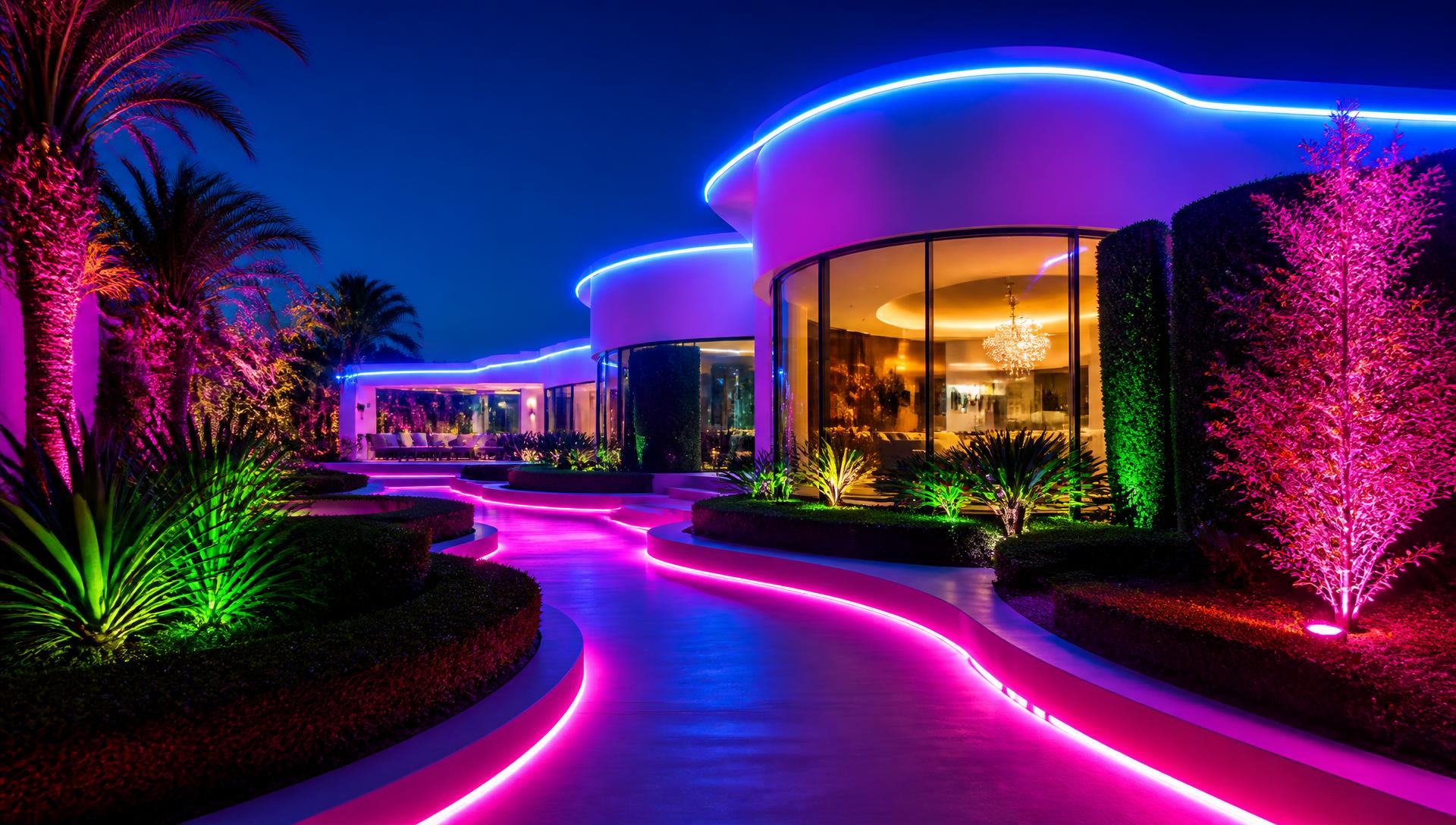
Lighting is where these gardens earn their reputation. The rule that separates a professional result from a disappointing one is that you should never see the source. Light is pushed into the underside of steps, buried in gravel beds to graze a wall, hidden behind planter lips to lift foliage, and threaded through canopy slats so the pattern lands on the ground. Warm white for planting and stone, a cooler tone or a controlled colour wash for architectural surfaces, and everything on scenes rather than switches — arrival, dining, swimming, late evening — so the garden changes character through the night.
Technology completes the picture without dominating it. Soil moisture sensors and weather linked irrigation keep planting alive on a fraction of the water. Robotic mowers and pool cleaners hold the garden at showroom condition between visits. Heating built into canopies and seating extends the usable season by months. None of it is visible in the photographs, and that is the point: the visitor sees a garden that looks effortless, and the effort has simply been moved into the design.