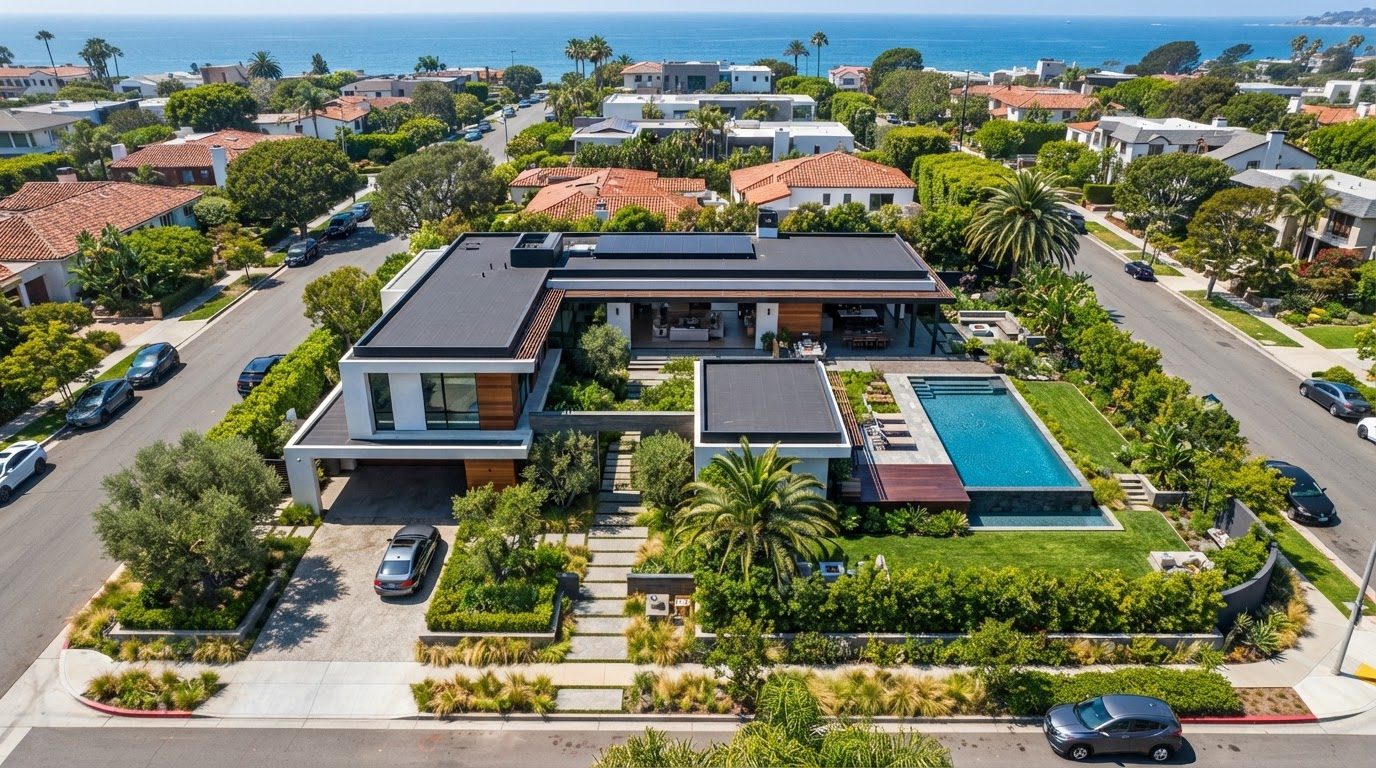
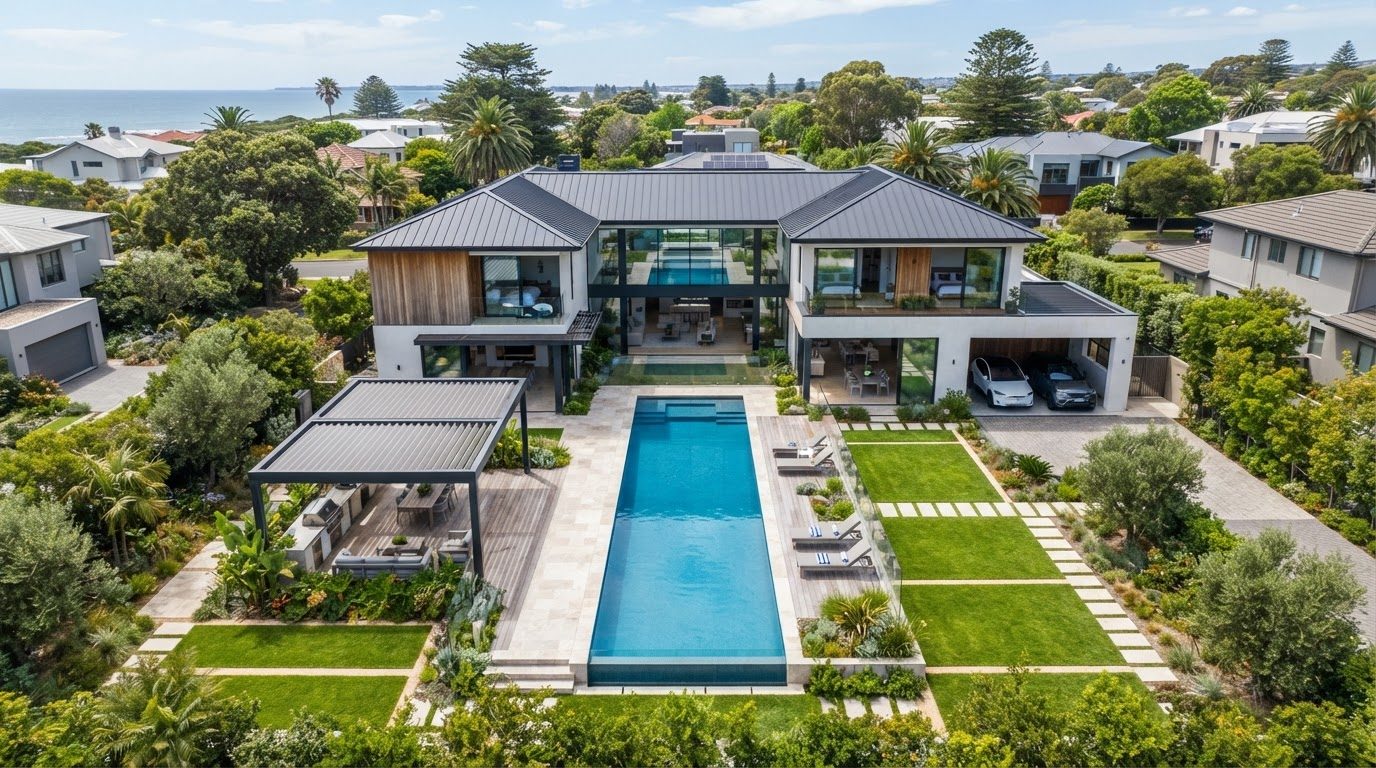
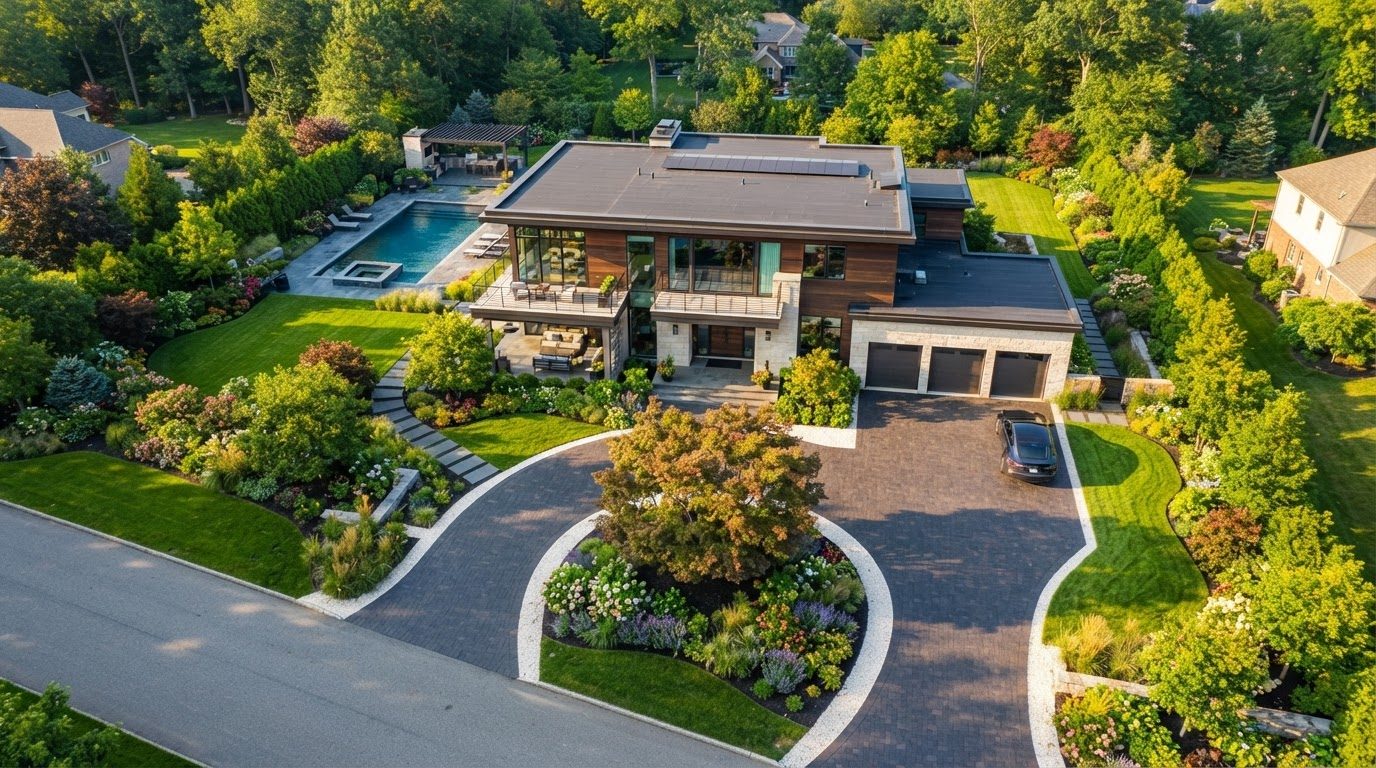
Pale timber terraces, low profile furniture framing the horizon, salt tolerant planting, outdoor showers, plunge pool courtyards and sheltered evening entertaining.
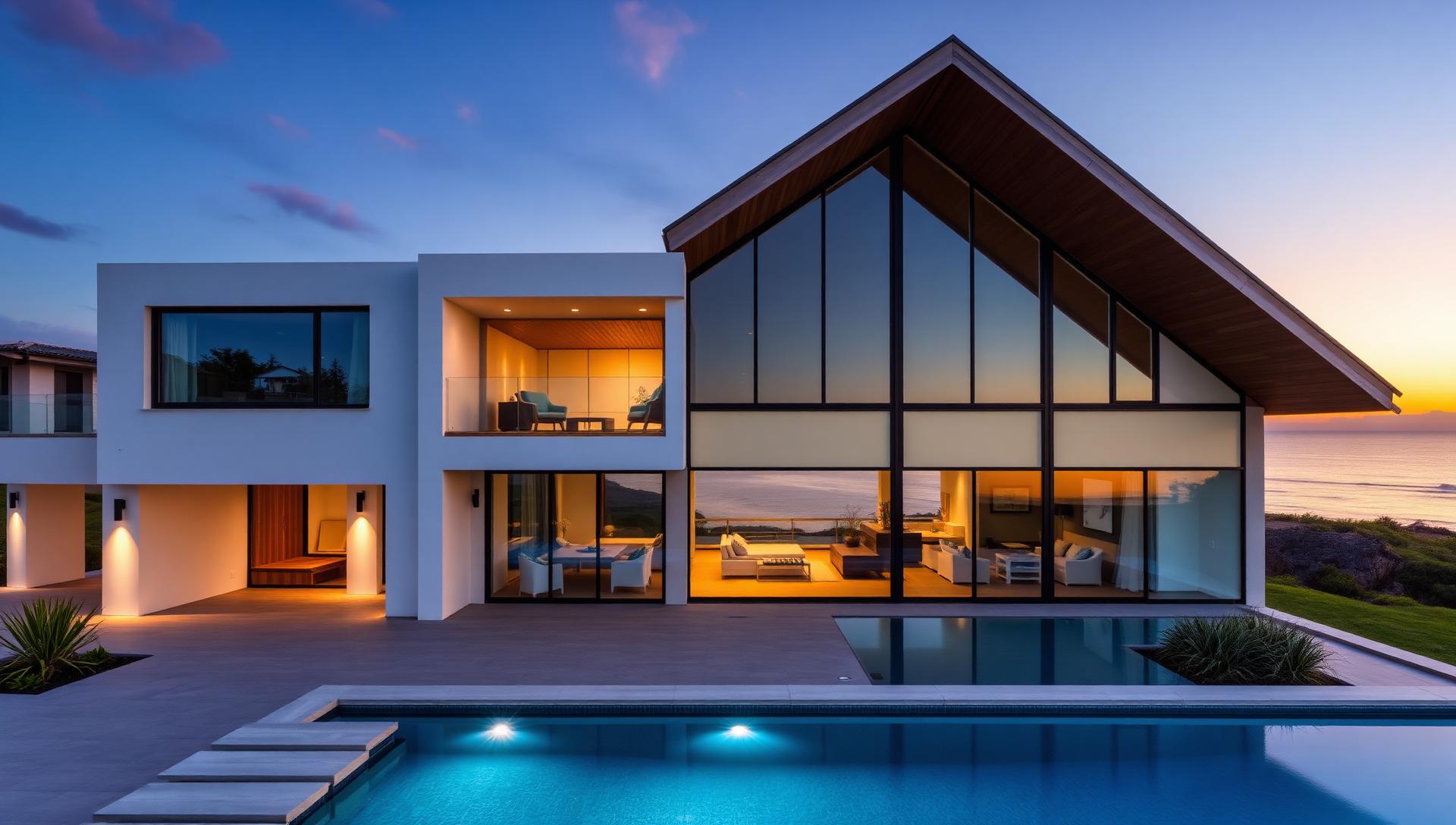
The modern coastal house is an exercise in restraint. Where the classic beach cottage decorates, the modern version subtracts until only the view, the light and one or two beautiful materials remain. Long horizontal lines, pale timber, off white render or lime wash, and glass placed so that the horizon lands exactly where the eye rests when you are seated.
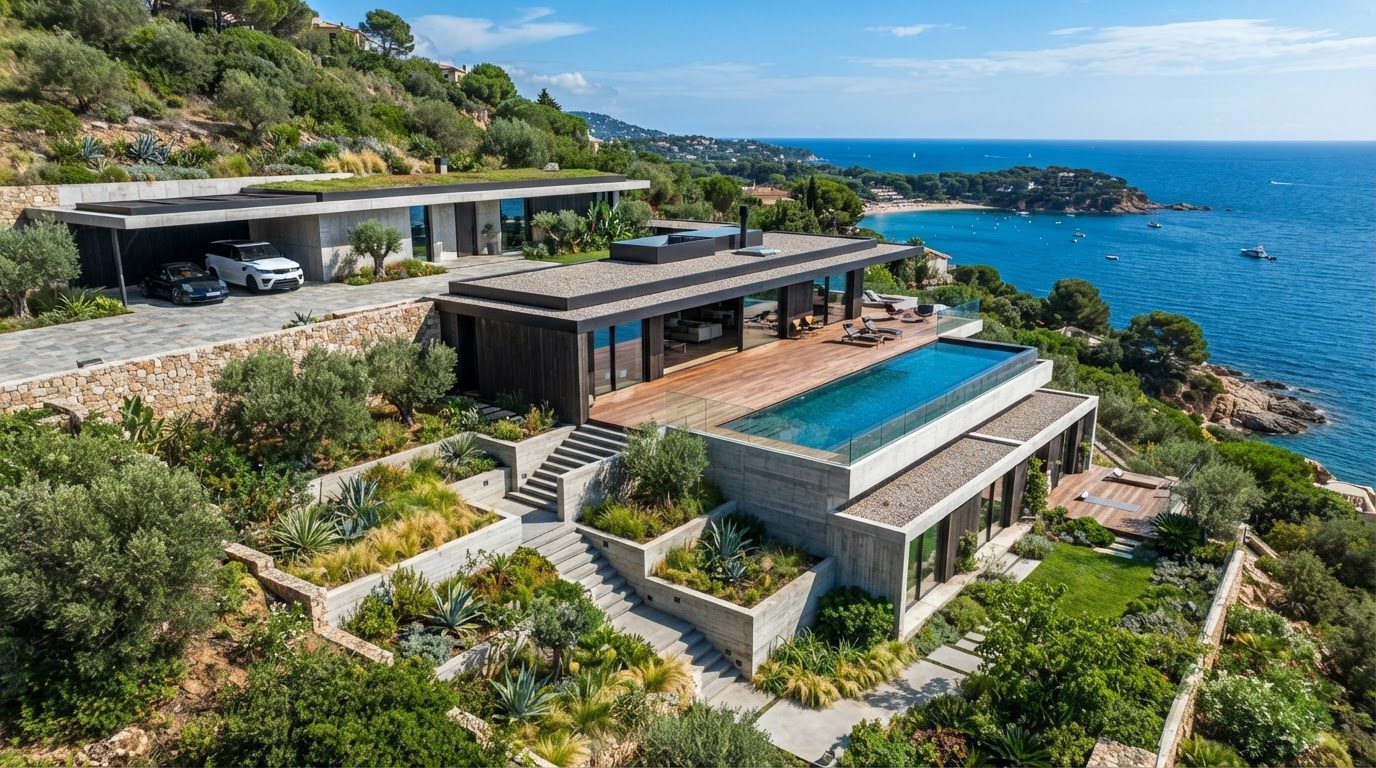
Terraces do the work of rooms. A deep pale timber deck on the seaward side, a sheltered courtyard on the other, and a covered dining terrace between them means there is always somewhere comfortable regardless of wind direction. Low profile furniture is essential — anything with a tall back cuts the horizon in half and makes the whole design feel cluttered.
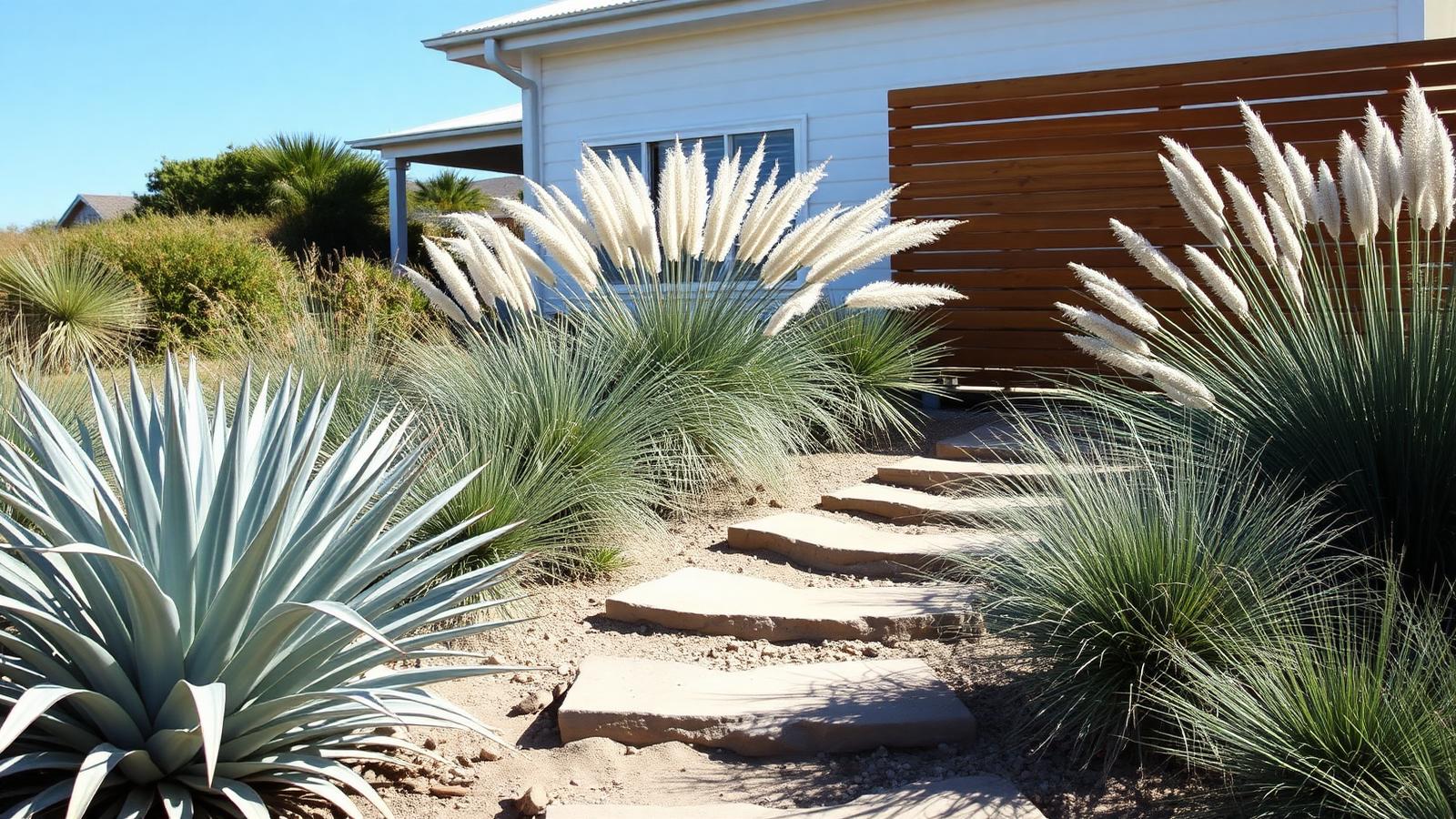
Coastal gardens have to earn their place in salt, sand and wind. The reliable palette is silver and grey green: coastal rosemary, westringia, agave, dune grasses, pigface, olive and hardy succulents, mulched with gravel or coarse sand and edged with hardwood. Group them in drifts rather than dotting them about, and plant a dense windbreak layer on the exposed boundary so the softer species behind it survive.
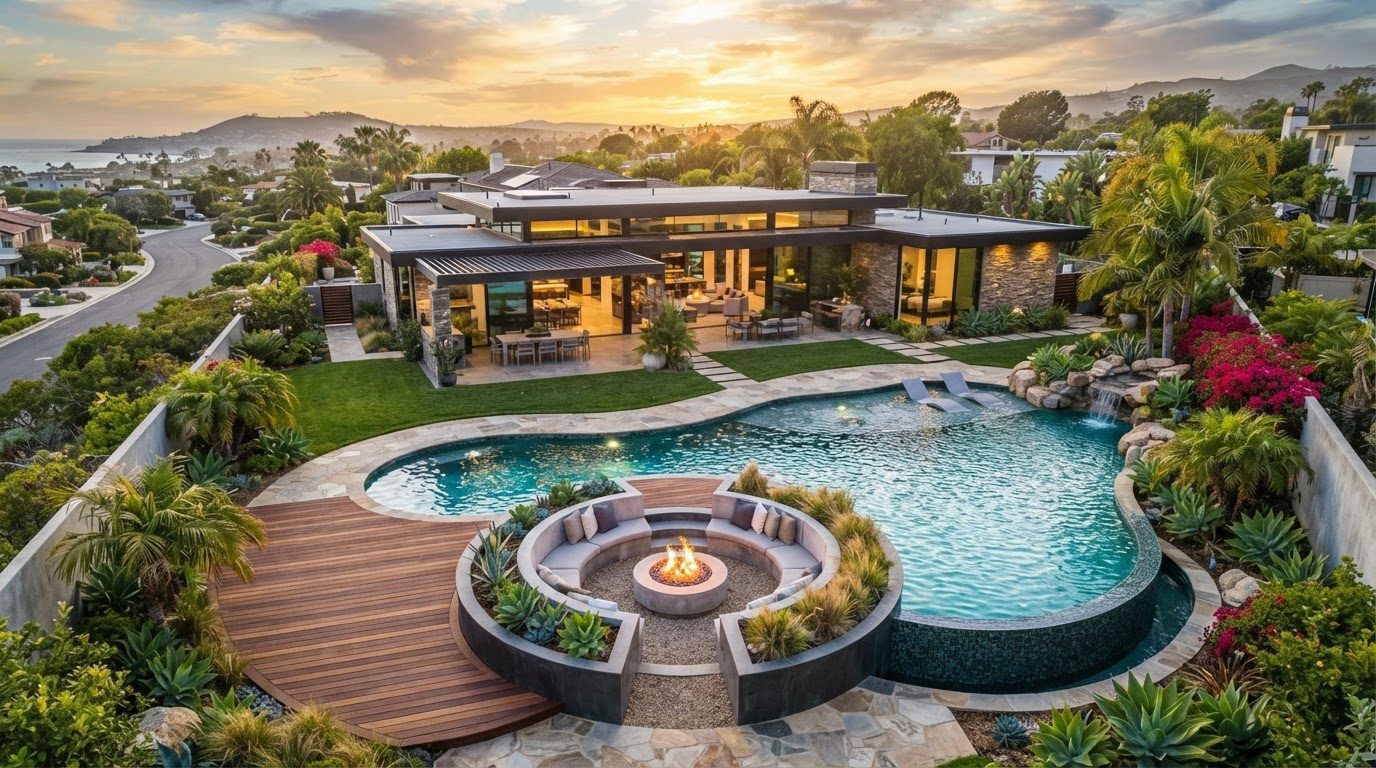
Water appears in two forms. A plunge pool courtyard for the days the surf is too rough, ideally sunk flush with the deck and finished dark so it reflects, and an outdoor shower by the door for the days it is not. The shower is the most used fixture in any beach house and deserves proper detailing: hardwood grate, mixer rather than cold only, hooks, a bench and enough screening to be usable.
Interiors continue the same short material list. Pale engineered or brushed timber floors, plaster walls, linen upholstery, teak and rattan, and one or two large pieces of ocean artwork rather than a gallery of small frames. Storage is planned for the reality of a coastal house — boards, towels, wetsuits, fishing gear, sandy shoes — because a modern interior only stays calm if everything has a place to disappear into.
Evenings are the part most designs forget. Once the sun has gone, the glass turns black and the garden vanishes unless it is lit. Graze light across a render wall, uplight the trunk of the one significant tree, run warm strip light under the deck edge and bench seating, and keep every fitting shielded so the view outward is preserved. Add a fire element in a sheltered corner and the coastal house gains an extra season.