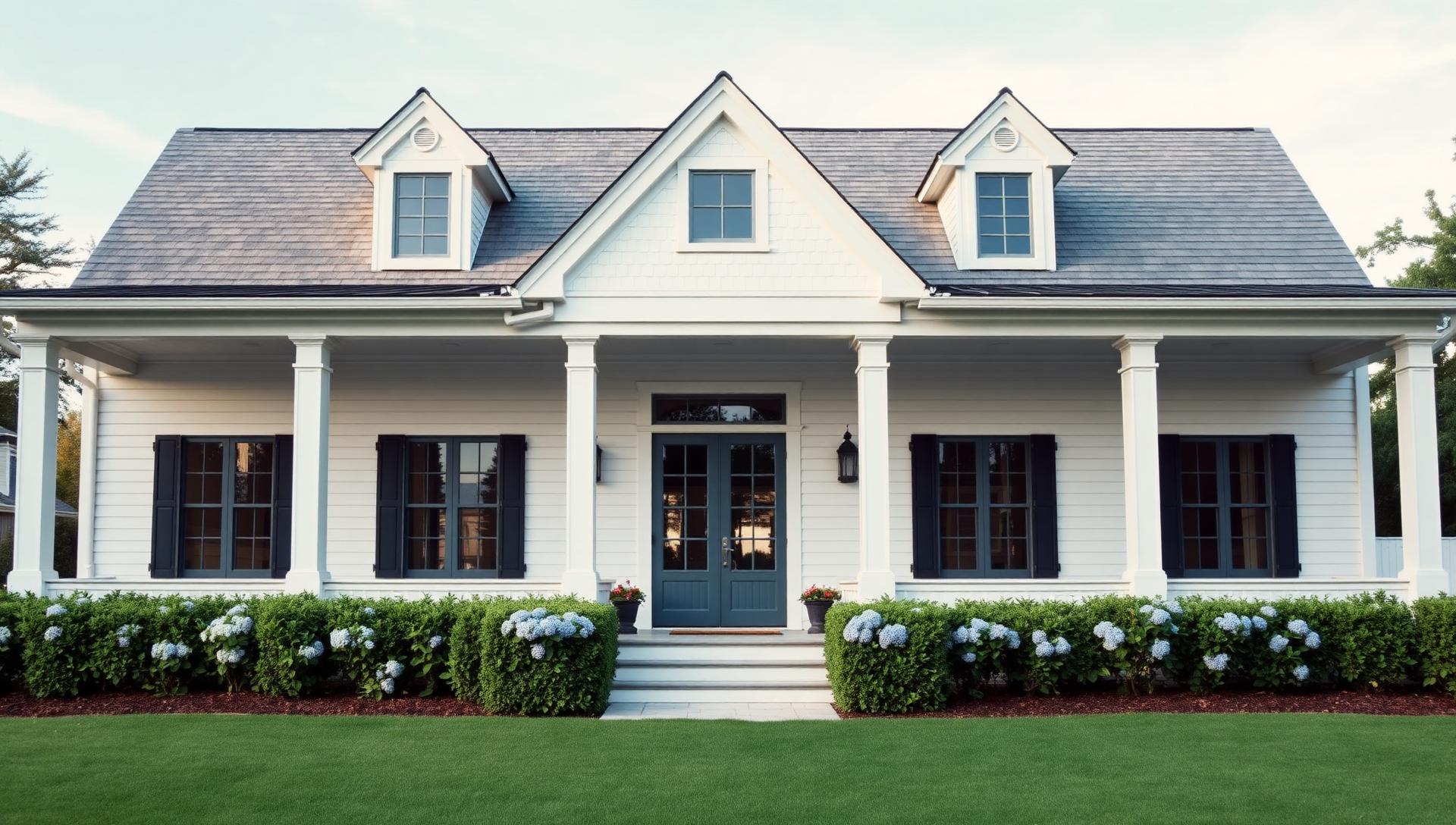
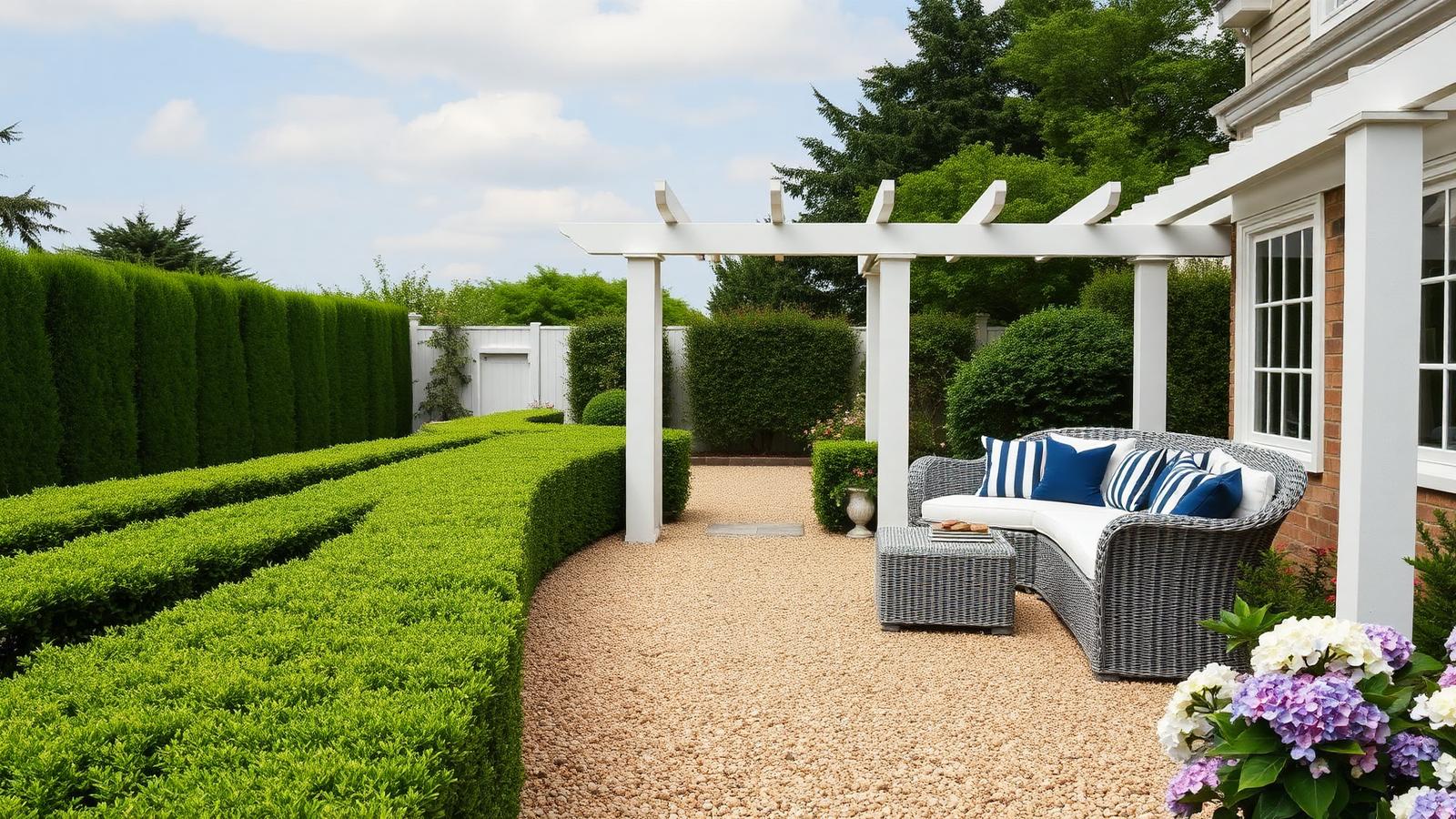
White weatherboard, clipped box hedges, hydrangeas, striped umbrellas, white cabanas and heavy natural linen — the complete Hamptons design language.
Hamptons style is often reduced to white paint and blue cushions, which is why so many versions of it look thin. The real language is a set of proportions and materials from American east coast summer houses: wide weatherboard, deep shaded verandahs, tall windows with genuine glazing bars, standing seam or shingled roofs, and gardens whose formality is softened by very generous flowering planting.
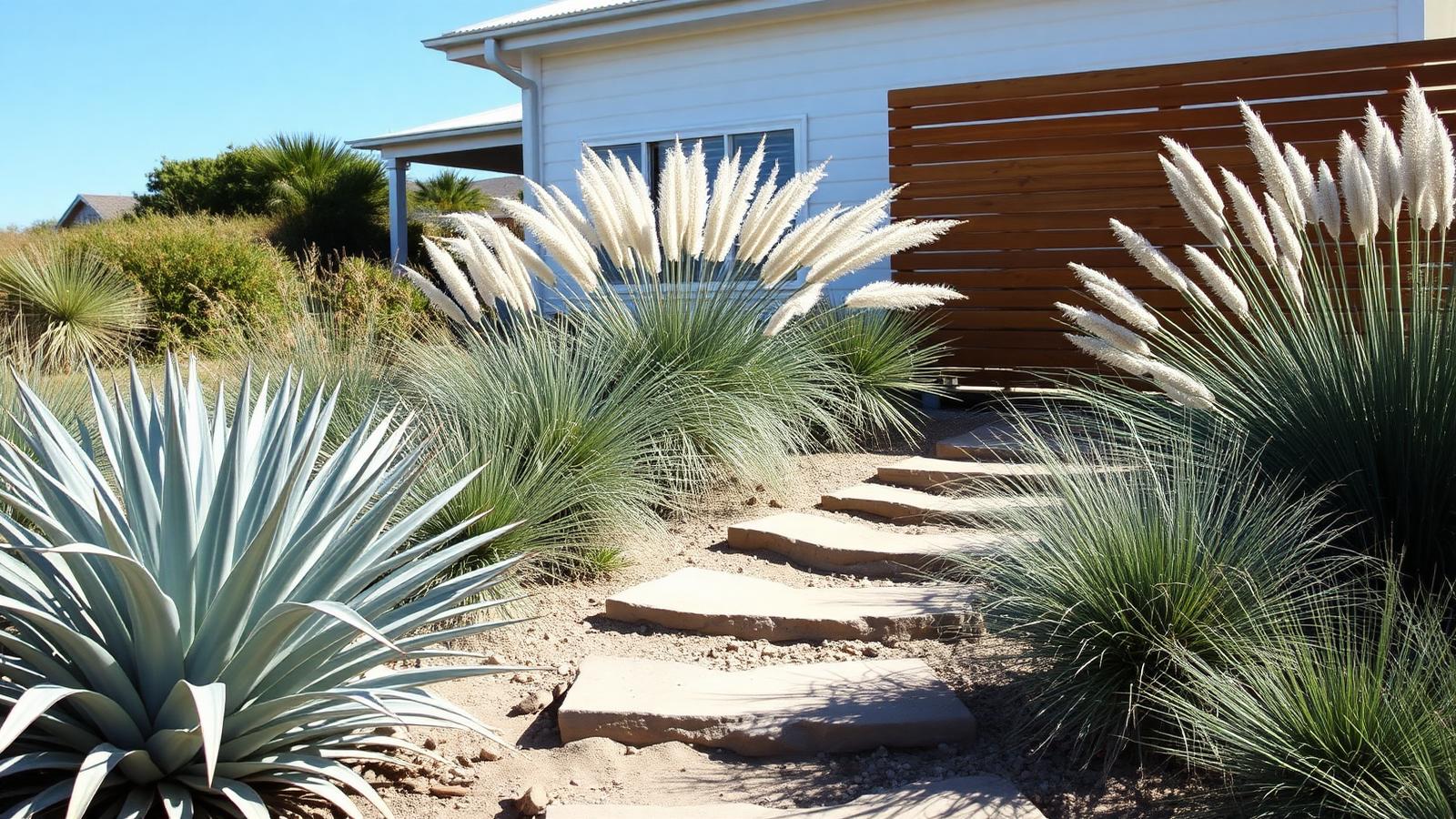
The garden is the half of the style most people skip, and it is the half that makes it convincing. Clipped box or similar hedging to hold the geometry, hydrangeas in blocks along the shaded side of the house, gravel or bluestone paths with crisp edges, standard trees in pots either side of the door, and lawn kept as a clean shape rather than a leftover. Formality in the structure, abundance in the flowering layer — that contrast is the whole idea.
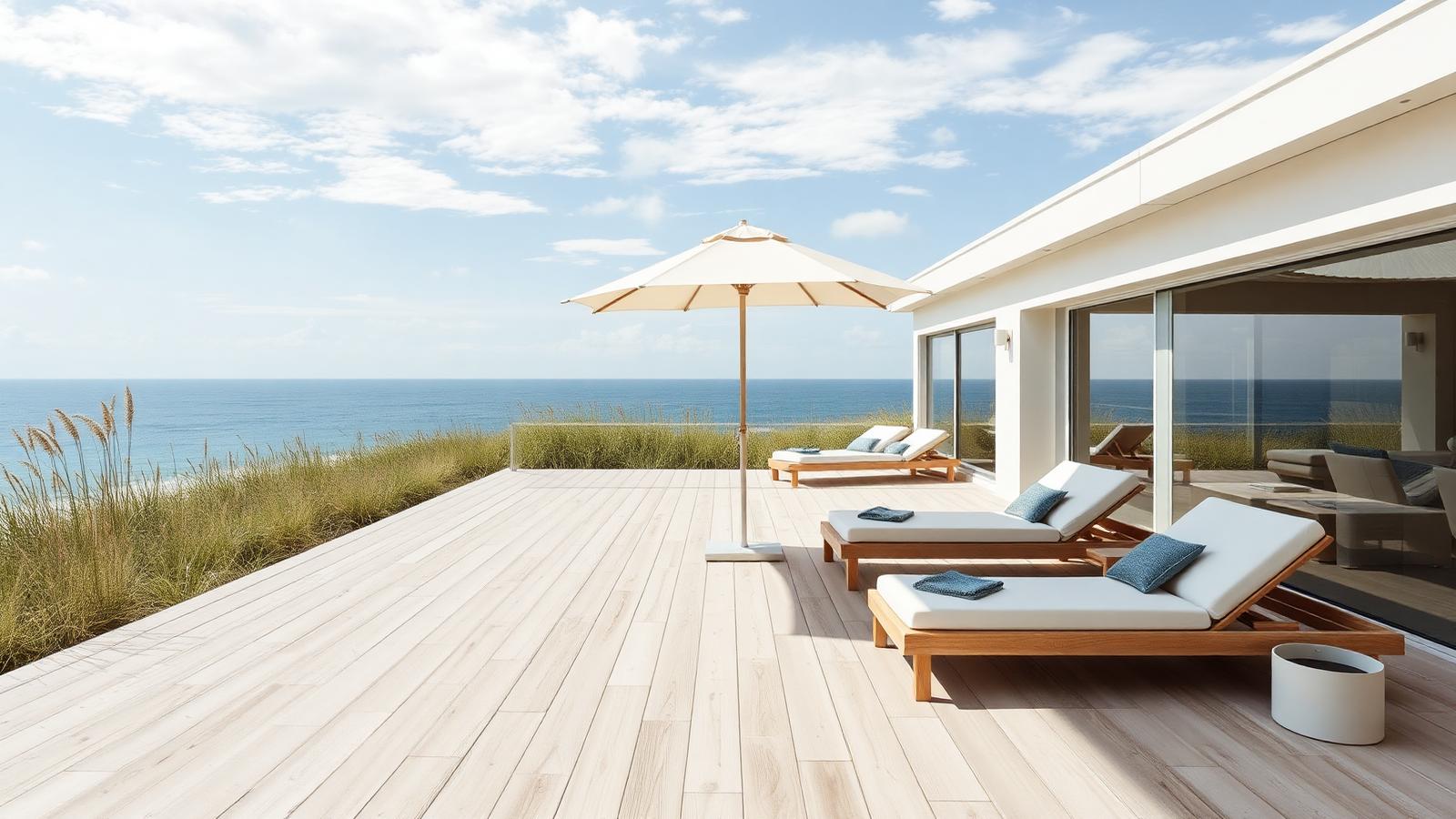
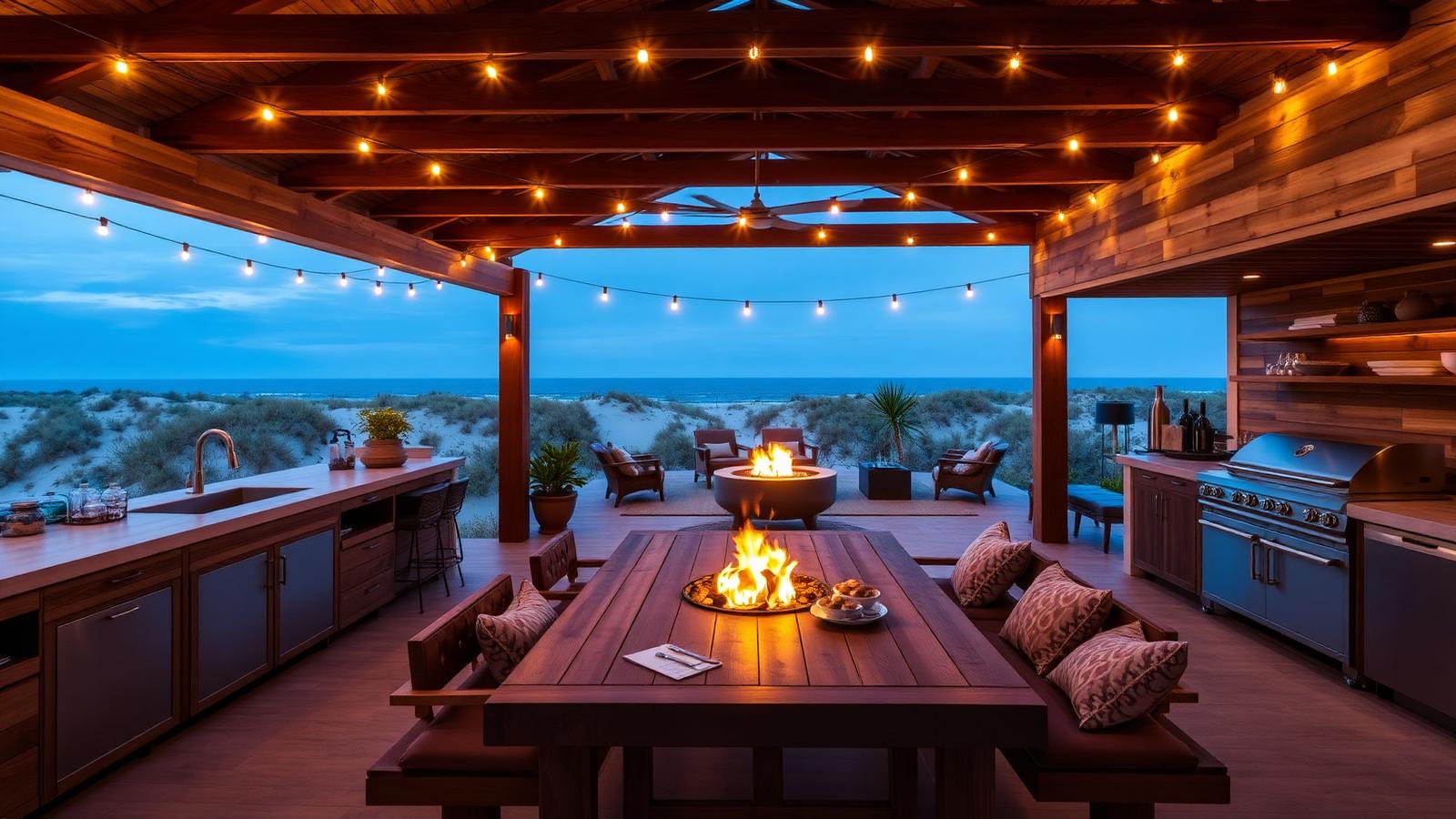
Outdoor furniture should be substantial and pale. Deep seated white or grey painted timber lounges with heavy linen cushions, a long dining table with woven or slatted chairs, oversized striped umbrellas rather than small ones, a white cabana or pergola with drop curtains for the pool surround, and lanterns instead of downlights wherever possible. Nothing shiny, nothing black framed, nothing that reads as contemporary minimalism.
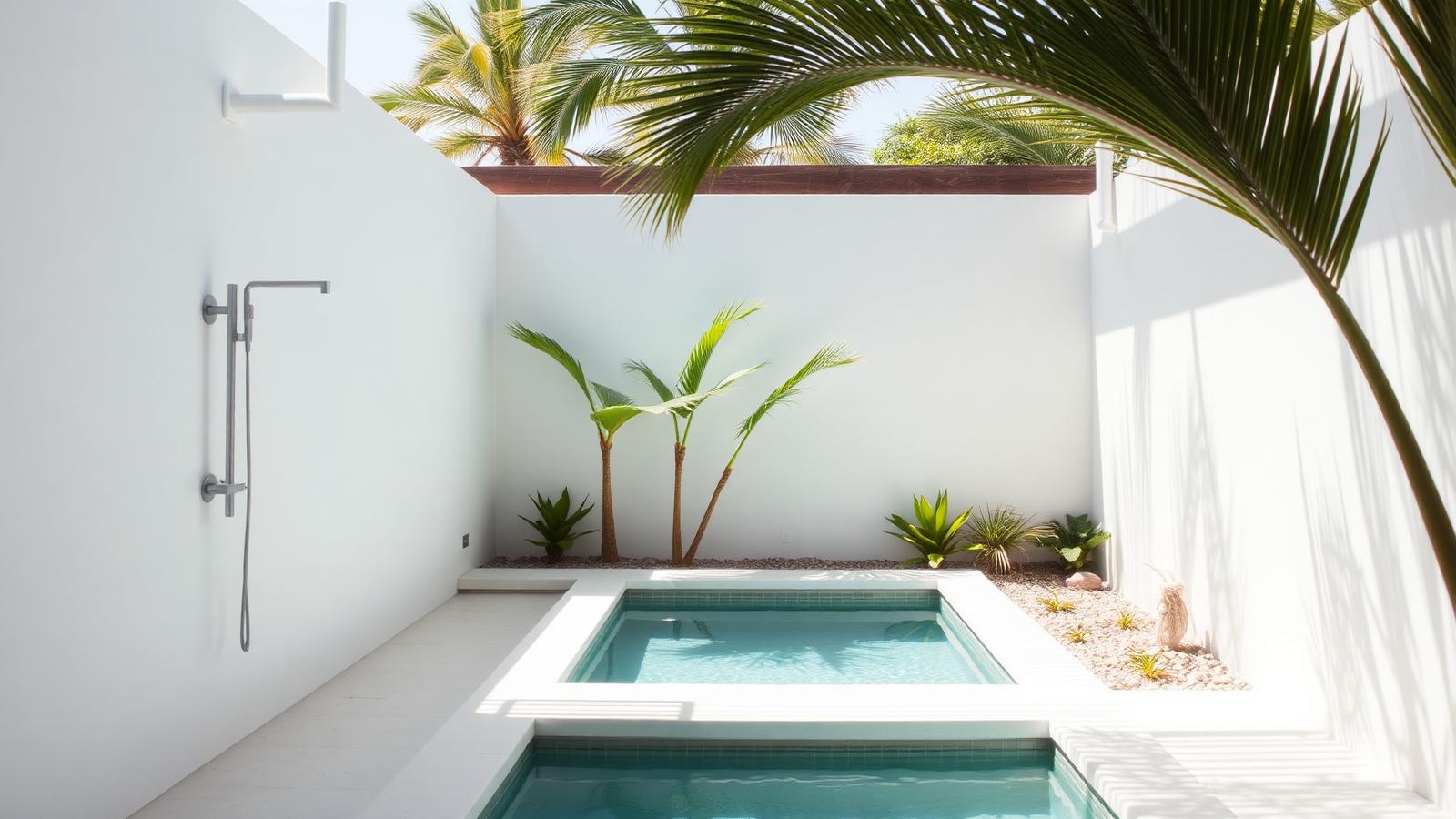
The pool area is where the style peaks. A rectangular pool aligned with the house, pale coping, a mid blue or pale grey interior rather than deep aqua, hedging to the fence line, a stone or timber deck wide enough for loungers with a path behind them, and the cabana at the far end as the visual full stop. Symmetry costs nothing here and delivers most of the effect.
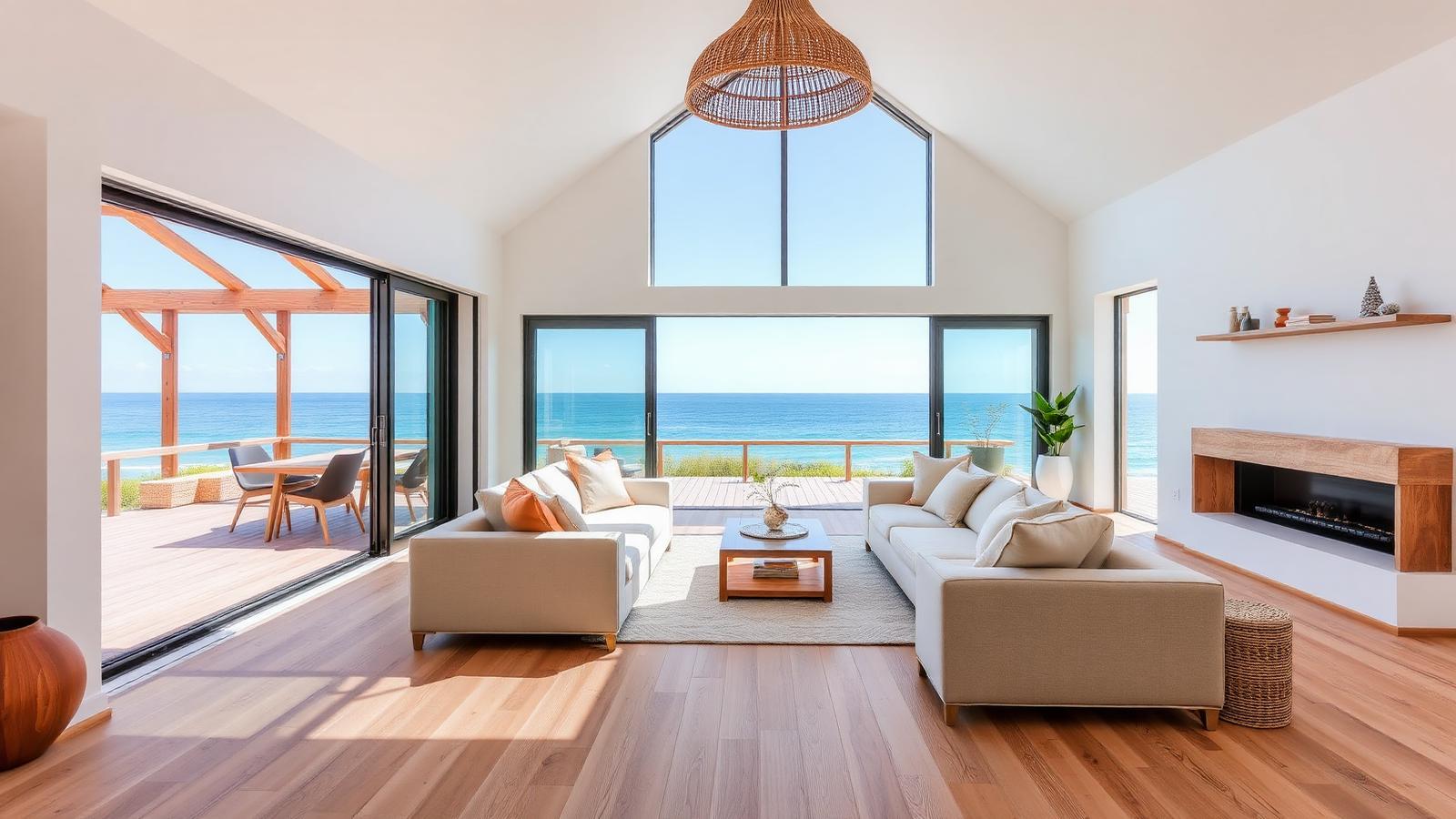
Interiors continue the palette without becoming a showroom. Panelled or v-groove walls in white and soft grey, pale wide plank floors, heavy natural linen on everything upholstered, rattan and rope textures, navy used sparingly as an accent, and large scale artwork or mirrors to catch the light. Layered light — lamps, sconces, a decent pendant over the table — rather than a grid of ceiling downlights.
Getting the style right in a warmer climate means adapting rather than copying. Deeper eaves and verandahs, shutters or external blinds on the western side, planting chosen for local conditions rather than the strict Long Island list, and ceiling fans in every room. Keep the proportions, materials and restraint of the original and the result reads as authentic Hamptons even when the plants are not.