Home Design Photos

House Design Photos is a HUGE Library Gallery and Directory of Home Design Photos

This Website Features a Massive Display of New House Design Ideas and Amazing Garden Landscape Design Photos.

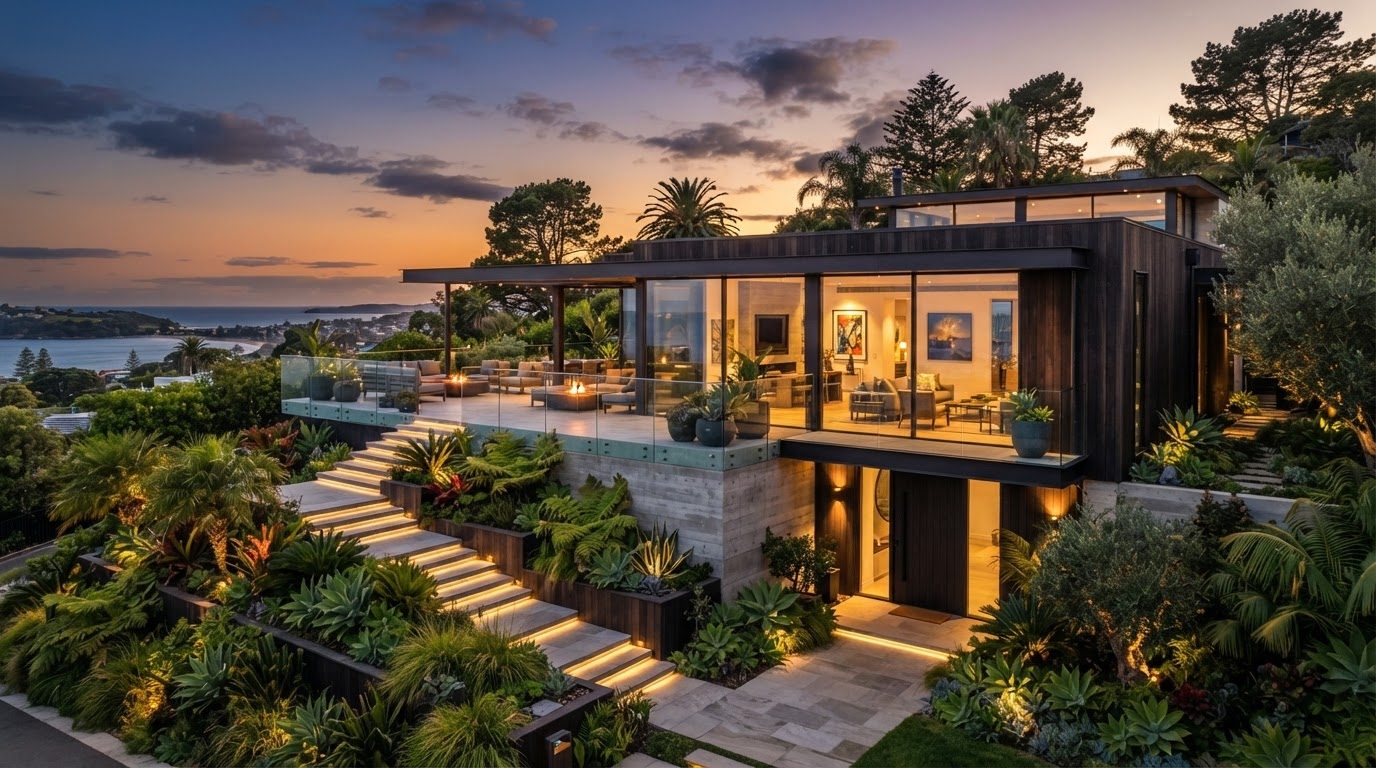
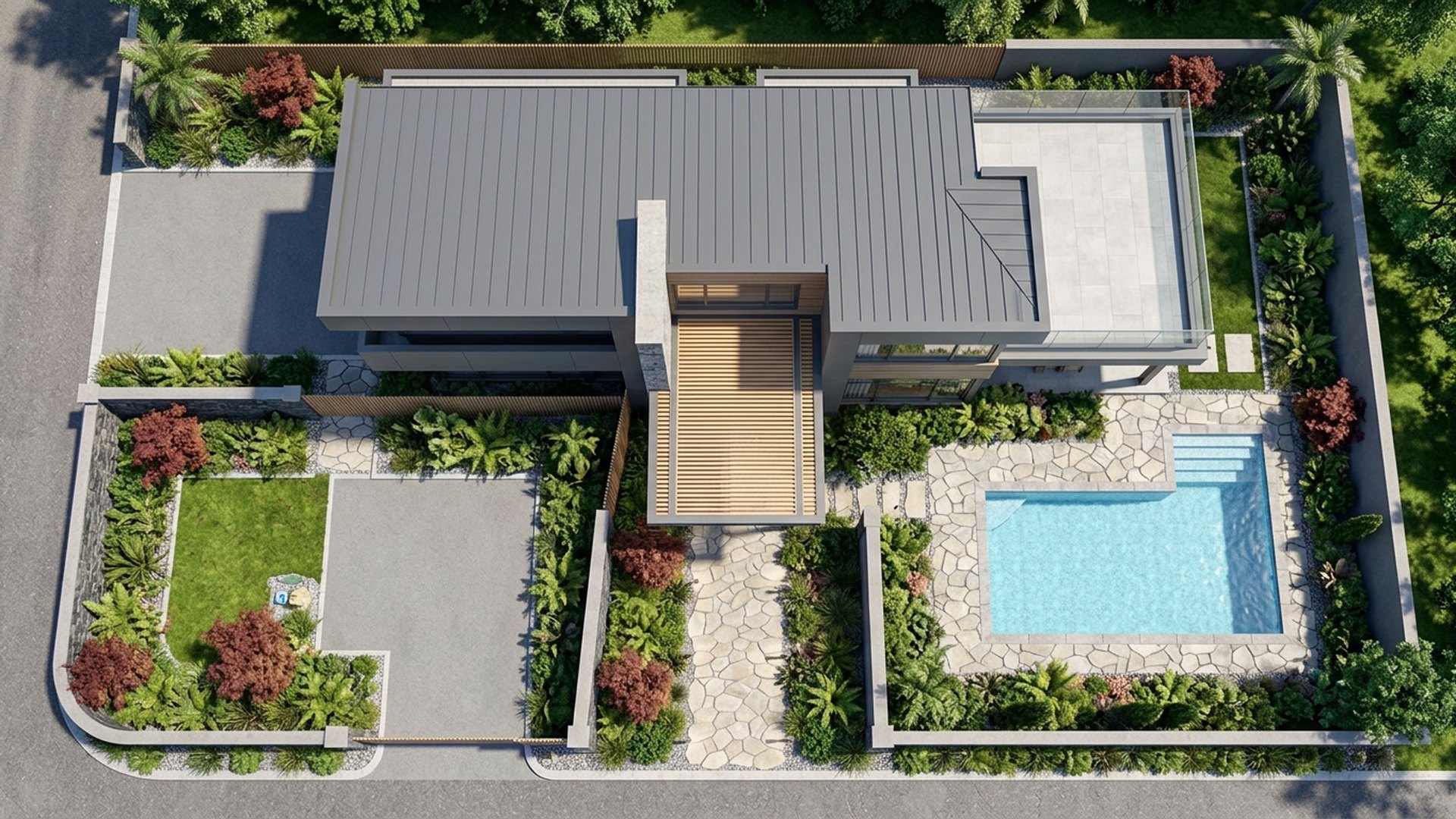
Tiny Homes How to Build Them, and 20 Designs for Inspiration feature article The build sequence that makes a tiny. this image created by www.homedesign-photos.com
Featured article · Tiny Homes

Tiny Homes — How to Build Them, and 20 Designs for Inspiration

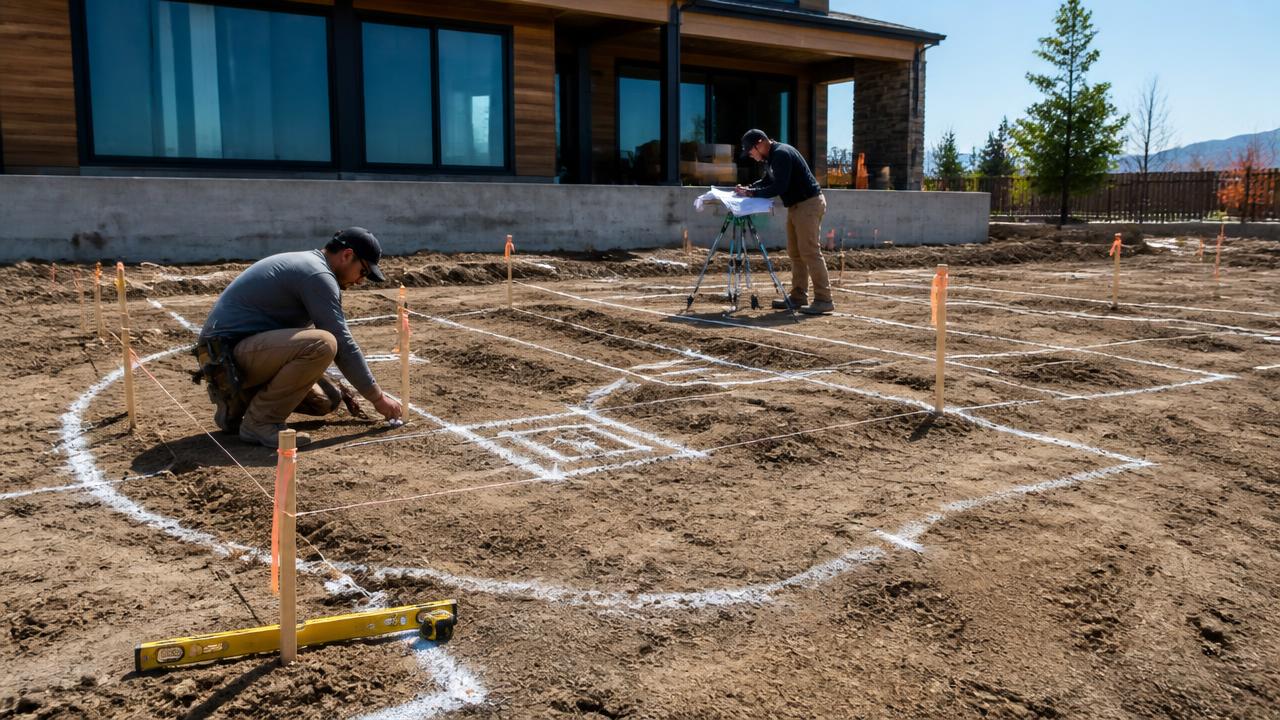
The build sequence that makes a tiny home last — level pad or rated chassis, square frame, weathertight shell, insulation, one services wall and staged fit-out. Almost every tiny home that fails does so for one of four reasons: it was built out of square, it was never made properly weathertight, it was under insulated, or its plumbing and wiring were scattered across the plan instead of gathered into one wall. The build sequence in this final part of the series exists to prevent those four failures, and it applies whether the home sits on a concrete pad or a road rated chassis. Start with the base. A fixed home wants a level pad, screw piles or a slab with drainage falling away on all sides, and a damp barrier that will still be doing its job in thirty years. A towable home wants a chassis rated well above the finished weight, with the axles positioned for the real load rather than the drawing. Get this stage wrong and every stage afterward is a compromise. Frame square and frame once. Check diagonals on the floor platform before a single wall goes up, stand and brace the walls plumb, and tie...

Read the full article

Full feature article · Garden Lighting

Garden Lighting Design Ideas and Night Time Garden Photos

The layers, colour temperatures and hidden fittings that turn a garden into a night time room — and the mistakes that make it look like a car park.
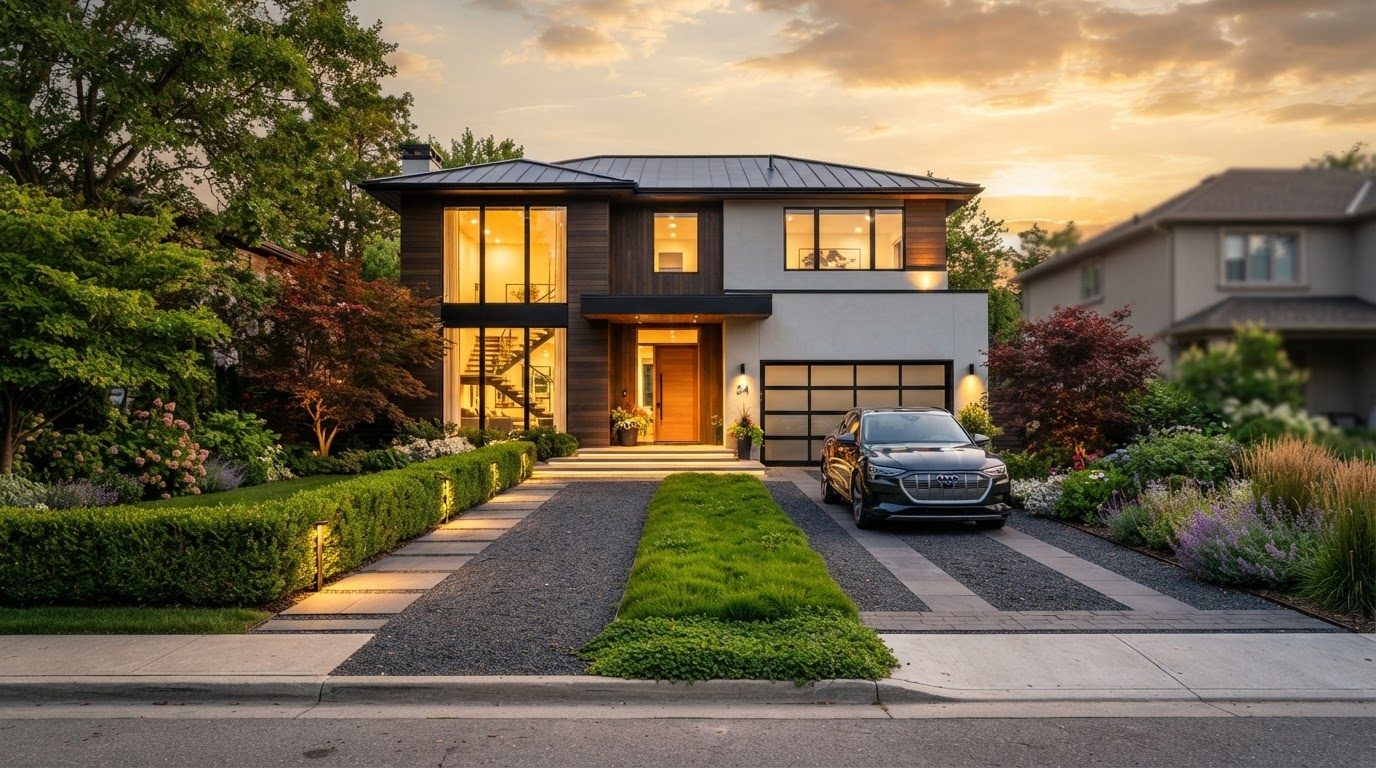
Garden Lighting Design Ideas and Night Time Garden Photos Garden Lighting home and garden design photo feature. this image created by www.homedesign-photos.com

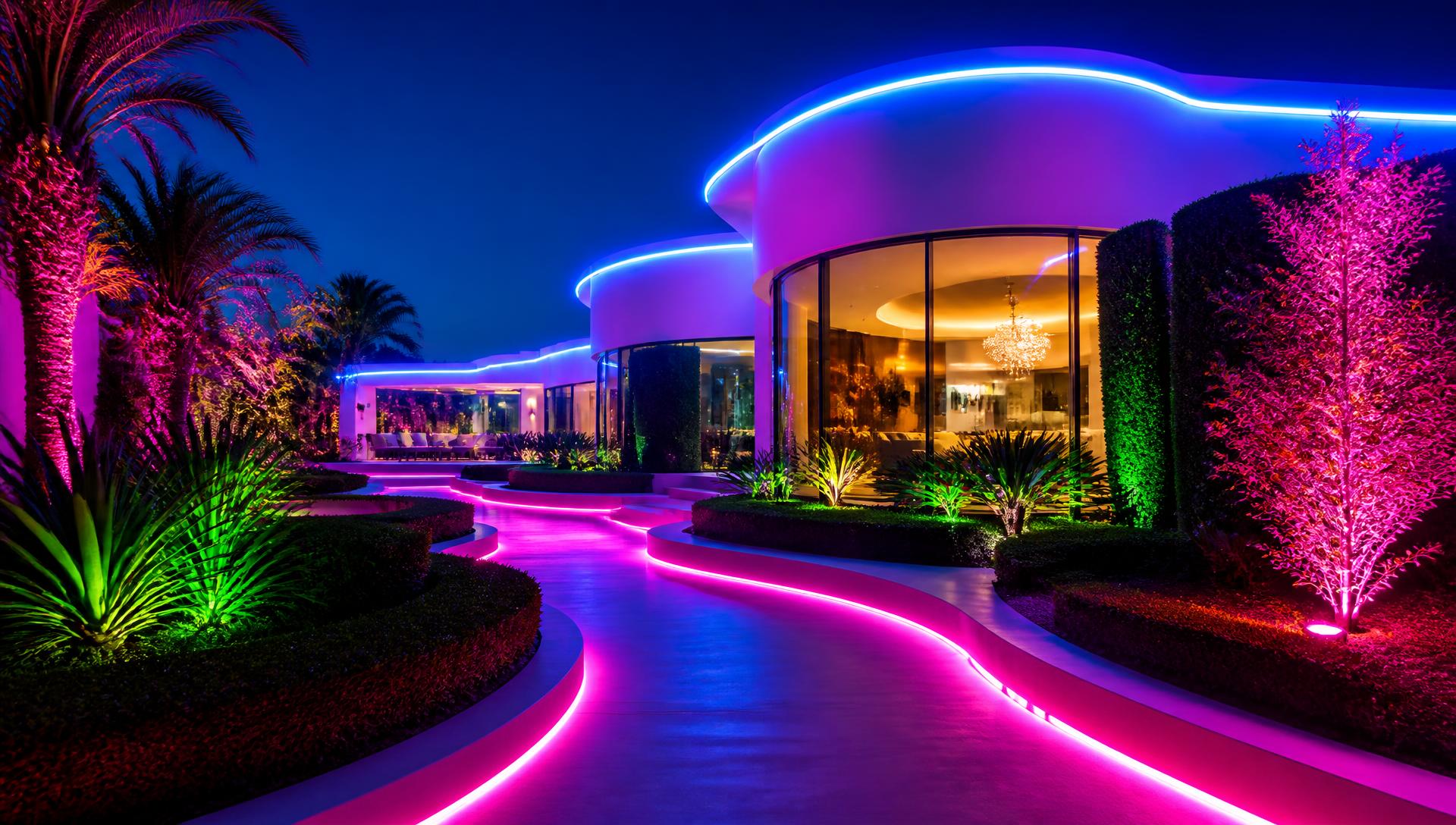
Garden lighting is the cheapest way to double the value of a garden, because it creates a second garden that only exists after dark. The principle that separates good schemes from bad is simple and absolute: light the object, never the viewer. If you can see the lamp, the fitting is in the wrong place. Every fixture should be hidden in planting, buried in gravel, recessed into a step or concealed behind a lip.

Work in layers rather than fittings. A low path layer for safe movement, an accent layer washing up tree trunks and grazing textured walls, a functional layer over the barbecue and dining table, and a feature layer inside water or under a canopy. Aim for pools of light with darkness between them; a garden lit evenly is a garden with no atmosphere at all. Three quarters of the garden should stay dark.

Colour temperature and control finish the job. Warm white around 2700 kelvin flatters skin, timber, stone and green foliage; cooler light makes planting look grey and makes a terrace feel commercial. Put everything on scenes rather than one switch — arrival, dining, swimming, late evening — and dim the whole system so the garden can be quiet as well as dramatic. Motion sensing belongs on the side path, not on the terrace.
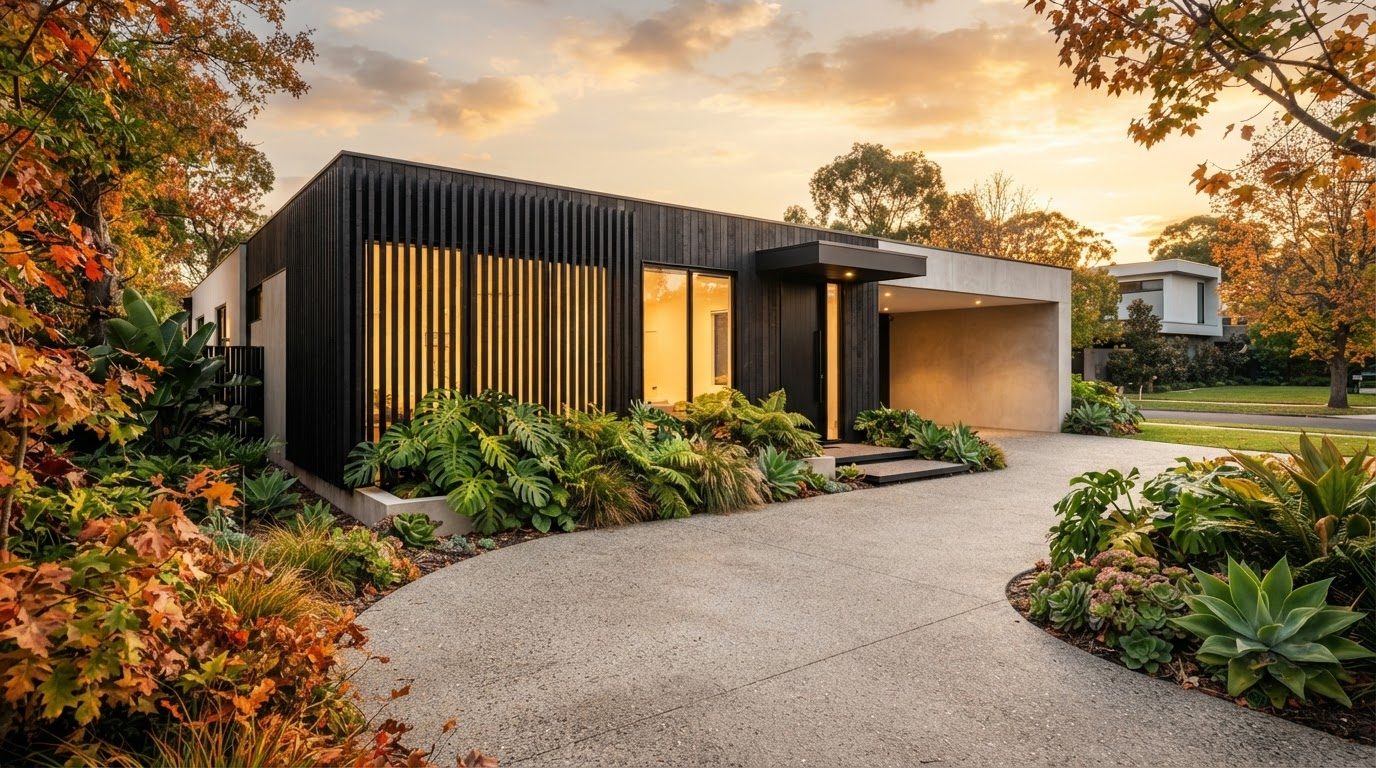
Garden Lighting design ideas photo from the Garden Lighting Design Ideas and Night Time Garden Photos feature. this image created by www.homedesign-photos.com

Quality and installation determine how long it lasts. Marine grade stainless or solid brass fittings in coastal areas, IP rated connections in proper junction boxes, low voltage runs sized for the cable length, and conduits under every path so fittings can be added later. Aim the lights at night with the planting in place, adjust after the first month, and revisit each spring as the garden grows — lighting is the one part of a garden that always needs tuning.
More feature articles

Full feature article · Futuristic Gardens

Modern Futuristic Garden Concepts — Lighting, Form and Technology

LED planter walls, glowing geometric pathways, hydroponic green walls, illuminated infinity pools and parametric canopies with concealed lighting, heat and sound.

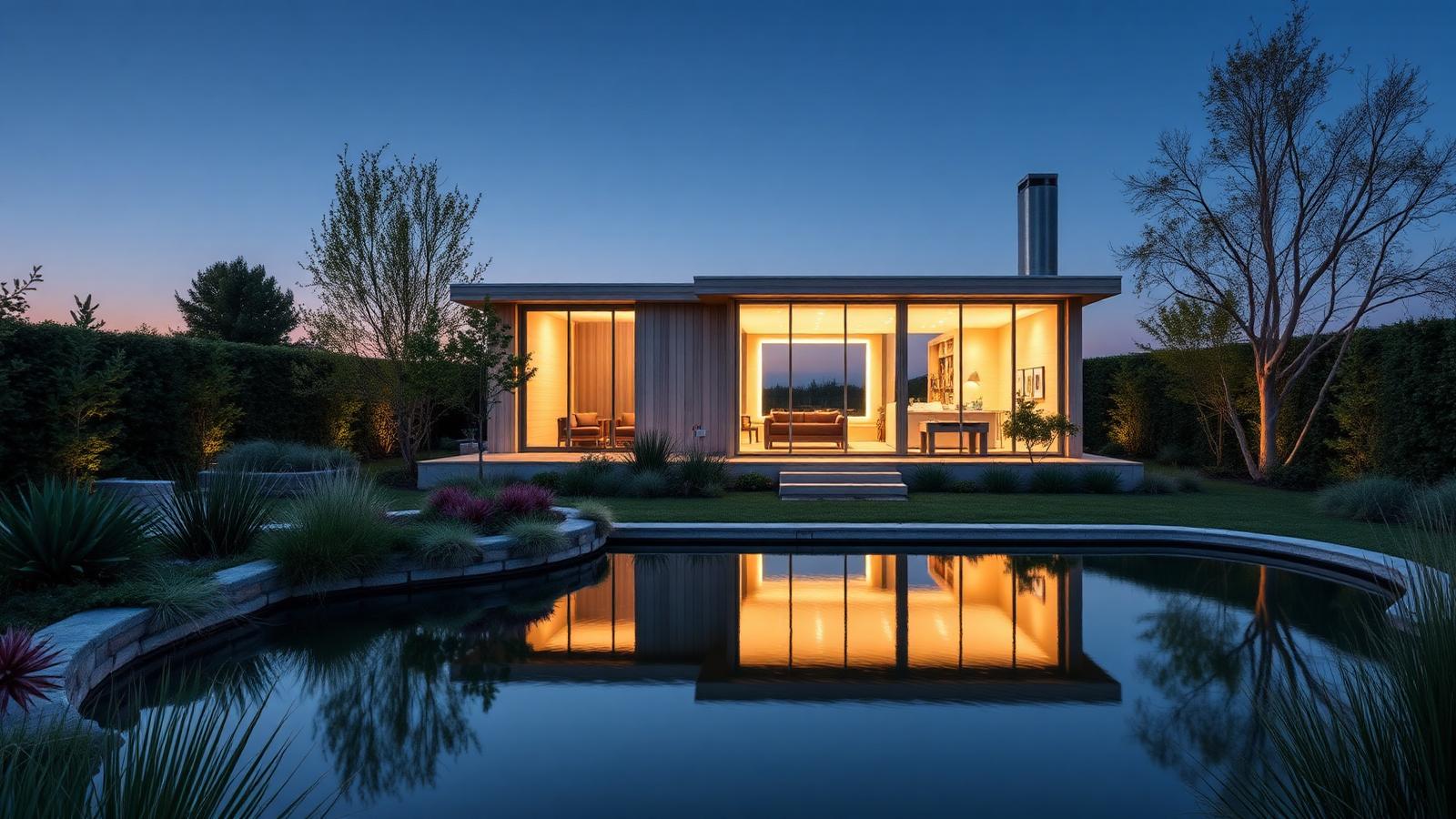
Modern Futuristic Garden Concepts Lighting, Form and Technology Futuristic Gardens home and garden design photo feature. this image created by www.homedesign-photos.com

Futuristic garden design has moved on from novelty lighting. The current language is architectural: strong repeated geometry, monolithic planters, floating steps, water held level with paving, and canopies that appear to hover. Technology is present everywhere and visible almost nowhere, which is exactly the effect that makes these gardens photograph so well.

Form comes first because light can only trace what already exists. Establish the geometry in daylight — the long axis, the repeated planter module, the alignment of the pool edge with the terrace edge — and the night version will look intentional. Gardens that skip this step end up as an ordinary yard with coloured fittings pointed at it.

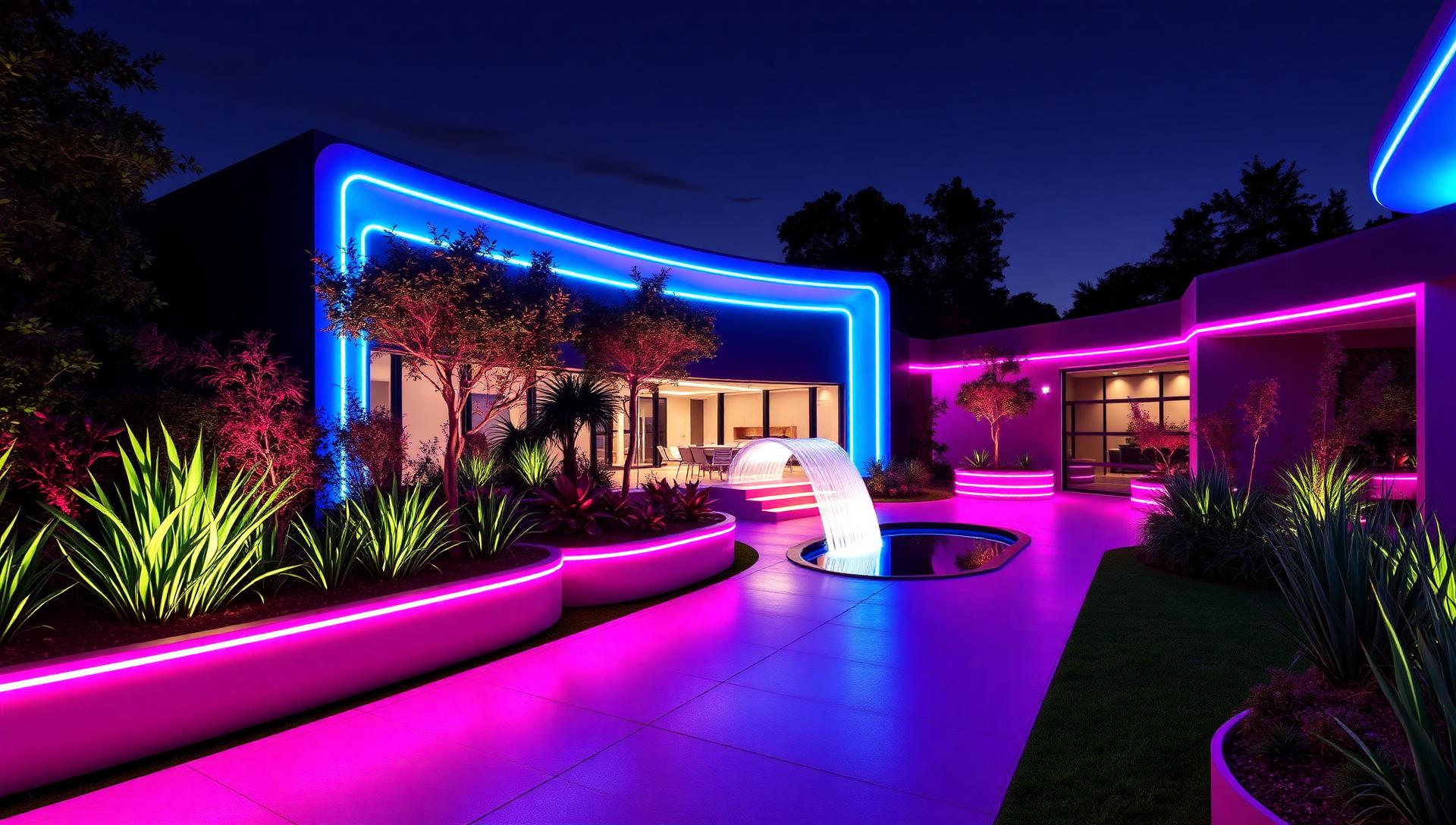
Lighting design follows three rules. Hide the source: bury fittings in gravel, tuck them beneath step nosings, behind planter lips and inside canopy slats. Layer the effect: a low warm wash for circulation, focused uplight on structure and trees, and grazing light on textured walls. Control it in scenes: arrival, dining, swimming and late evening, each a different garden built from the same fittings.

Futuristic Gardens design ideas photo from the Modern Futuristic Garden Concepts Lighting, Form and Technology feature. this image created by www.homedesign-photos.com

Living walls and hydroponic panels are the practical face of the style. They provide the mass of greenery that stops all this geometry feeling cold, and they do it on a vertical plane where no ground space exists. They only succeed with proper irrigation, a drainage tray, a substrate that lasts and a species list suited to the light on that particular wall — otherwise they become an expensive brown rectangle within two seasons.

Water is the most powerful element available and the least forgiving. An infinity edge that spills into a hidden channel, a black lined pool that mirrors the canopy above it, or a still reflecting pond require precise levels and hydraulic design. Underwater lighting should be warm and dim rather than bright and blue; the aim is a glowing plane, not a public aquarium.

The technology layer is what makes these gardens liveable rather than merely photogenic. Weather linked irrigation and soil sensors, robotic mowing and pool cleaning, radiant heating in canopies and benches, discreet outdoor audio, and one app that ties lighting scenes, water features and heating together. Specified well, none of it announces itself — the visitor simply notices that the garden always looks its best and is always the right temperature to sit in.